

-SEB%20CREDIT%20MarshallIslandsPocketGuide.com.webp?v=2026-07-23T17%3A38%3A55.480Z)
How to Plan a Family Trip to the Marshall Islands
Scattered like emerald necklaces across an enormous sweep of the Pacific, the Marshall Islands offers families something increasingly rare: warm lagoons, quiet beaches and island adventures without the crowds. Children can sail on traditional canoes, snorkel from coral islets, explore World War Two sites and spend entire afternoons beside water so blue it barely looks real.
A family holiday to the Marshall Islands is not a conventional resort escape. Travel takes more planning, facilities can be simple and journeys between atolls may involve small planes or local boats, but that is also what makes the experience so memorable. Your days might begin with pancakes in Majuro, continue with a boat trip to a remote lagoon island and end beneath a sky crowded with stars rather than hotel lights.
Majuro provides the easiest base for travelling with kids, with family accommodation, restaurants, supermarkets and medical services within reach. From there, adventurous families can visit Arno Atoll, stay in a simple island cottage or travel farther into the outer atolls for traditional villages, empty shores and a deeper look at Marshallese life.
Whether you are planning your first Pacific family holiday or searching for somewhere far beyond the usual tourist trail, this complete family travel guide to the Marshall Islands covers everything you need. Discover when to visit, what to pack, where to stay, how to get around with children, family-friendly things to do, places to eat and the typical cost of a Marshall Islands family trip.
This article is based on real on-the-ground research, not on AI scraping old content from the internet. Learn how we use AI!
Table of Contents
An Intro to the Marshall Islands
Location: The Marshall Islands is an island nation in the central Pacific Ocean, forming part of Micronesia in Oceania. It lies approximately 2,300 mi (3,700 km) southwest of Hawai'i and 500 mi (800 km) north of the Equator, with Kiribati, Nauru and the Federated States of Micronesia among its nearest Pacific neighbours. Find out more in Where Is the Marshall Islands Located?
Size: The Marshall Islands has a total land area of approximately 70 mi² (181 km²). The country consists of 29 coral atolls and five isolated islands divided between two island chains, the Ratak Chain in the east and the Rālik Chain in the west. Learn more about it in The Atolls of the Marshall Islands & The Best to Visit.
Climate: Temperature – 30°C (86°F), yearly average rainfall – 2,975 mm (117.1 in), and year-round high humidity.
Find out more in our guide to Marshall Islands Weather, Seasons & Climate.
Time zone: UTC/GMT +12.
Find out more in What Is the Marshall Islands Time Zone?
Population: 42,418.
Find out more in Who Are the People of the Marshall Islands?
Languages: Marshallese and English.
Find out more in What is the Marshall Islands Language?
-SEB%20CREDIT%20MarshallIslandsPocketGuide.com-900x601.webp?v=2026-07-07T21%3A14%3A33.008Z)
How to Get to the Marshall Islands
What is the best way to get to the Marshall Islands with your family? The country can be reached by international flight, cruise ship or private sailing yacht, although flying is by far the most common option.
Reaching such a remote part of the Pacific usually involves at least one connection, so give your family plenty of breathing room between flights. A little extra time in the airport is far easier than sprinting towards a departure gate with children, backpacks and one mysteriously missing shoe.
Flying to the Marshall Islands
International flights to the Marshall Islands are limited, with the main connections operating through Honolulu, Guam, Tarawa, Pohnpei, Nauru and other central Pacific hubs.
United Airlines connects the Marshall Islands with Honolulu and Guam through its "Island Hopper" service, while Nauru Airlines provides another island-hopping route from destinations such as Tarawa and Pohnpei. Families travelling from Australia, New Zealand or Fiji will usually need at least two connecting flights.
See Which Airlines Fly Directly to the Marshall Islands? for more advice.
Most international visitors land at Amata Kabua International Airport (MAJ), also known as Marshall Islands International Airport, on Majuro Atoll. International services also call at Kwajalein, although access arrangements there are more specialised.
Keep medication, a change of clothes, children’s snacks and a few familiar forms of entertainment in your carry-on luggage. With several flight sectors involved, you will be glad to have the essentials close at hand if checked baggage takes a different island-hopping adventure.
Find out what to expect after landing in Arriving in the Marshall Islands: Airport Customs, Biosecurity & Arrival Process.
Cruises to the Marshall Islands
The Marshall Islands is not a regular stop on most Pacific cruise itineraries, but some expedition cruises, grand voyages and round-the-world cruises visit the country.
Most cruise ships call at Majuro, while specialist expeditions may also reach outer atolls such as Mili and Jaluit. Cruises usually visit as part of longer Pacific crossings from destinations such as Fiji, the United States or other regional hubs.
For families, cruising can make the journey easier by keeping your cabin, meals and transport together. However, port calls are uncommon, time ashore may be limited and itineraries can change, so check the schedule carefully before booking.
Find out which cruise lines visit in The Best Cruises That Go to the Marshall Islands. You can also learn what to expect ashore in The Complete Guide to the Ports of Call in the Marshall Islands.
Sailing to the Marshall Islands
Families travelling on their own yacht can include the Marshall Islands on a wider journey between Hawai‘i, Micronesia, Kiribati, Fiji and other Pacific cruising grounds.
Majuro is the country’s main yachting hub, offering lagoon anchorages, basic marine services, provisioning and access to the government offices required for clearance.
Overseas yachts must enter through Majuro or Ebeye and complete immigration, customs and port formalities before travelling elsewhere. A 72-hour pre-arrival notification is required, while separate permits may be needed before visiting individual outer atolls.
Learn about entry procedures, permits and anchorages in the Sailing Guide to the Marshall Islands: Tips for Yachting in the Marshall Islands.
A Note on Customs Declarations
The Marshall Islands has biosecurity rules designed to prevent unwanted pests and diseases from entering the country. Travellers should declare risk items such as packaged snacks, fresh food, meat, plants, shells, wooden handicrafts and outdoor equipment carrying soil. It's also important for families to get their vaccinations done, especially MMR/measles for children four years of age and under. You may be asked for proof of this upon entering the country.
Families often travel with more food, medicines and assorted bits of equipment than they realise, so check every bag before completing the declaration. There are also prohibited goods, including e-cigarettes, that are worth knowing about before packing.
When in doubt, declare it. Declaring an item does not automatically mean it will be confiscated, but discovering the rules beside the baggage scanner is not the most relaxing way to begin your family holiday.
Be sure to read Arriving in the Marshall Islands: Airport Customs, Biosecurity & Arrival Process before departure.
For more advice, see Getting Here: How to Get to the Marshall Islands?
-S%20CREDIT%20MarshallIslandsPocketGuide.com-900x601.webp?v=2026-07-08T19%3A47%3A33.898Z)
When to Visit the Marshall Islands with Kids
The Marshall Islands has a tropical climate with warm temperatures, high humidity and inviting lagoon water throughout the year. Rather than four distinct seasons, the country experiences a drier period with steadier tradewinds and a wetter period with heavier, more frequent rainfall.
For most families, the dry season provides the easiest conditions for beach days, boat excursions and exploring outdoors. However, you can still enjoy a family holiday during the wet season when you build some flexibility into your plans.
Learn more about the climate in Marshall Islands Weather, Seasons & Climate + Weather by Month.
Dry Season (December to April)
The dry season is the most popular time to visit the Marshall Islands, with temperatures of around 77-86°F (25-30°C) and average monthly rainfall of 5.5-10.7 in (140-273 mm).
This is the main season for surfing, kitesports, scuba diving, fishing for mahimahi and staying at some of the country’s remote watersports resorts. Families will also find it easier to arrange lagoon trips, beach days and outdoor sightseeing when rainfall is less frequent.
Conditions are still hot and humid, so plan active outings for the morning, carry plenty of drinking water and give younger children time to rest during the warmest part of the day. Showers can occur even in the dry season, but they are less likely to take over the entire itinerary.
Wet Season (May to November)
The wet season remains hot and humid, with temperatures of around 77-86°F (25-30°C) and average monthly rainfall of 9.8-12.1 in (248-307 mm).
This period overlaps with the North Pacific tropical storm season, which means there is a risk of typhoons. Rain, rougher seas and transport disruption can affect boat trips or journeys to the outer atolls, so avoid packing your itinerary too tightly.
The wet season also brings fishing for sailfish and major celebrations such as Constitution Day and Fisherman’s Day. Visitor numbers are especially low, although some remote resorts reduce their services or close.
Keep a few flexible activities in reserve for rainy periods, such as museums, handicraft shops and relaxed meals in Majuro. Families travelling between atolls should also leave extra time before their international departure in case weather affects flights or boats.
Learn how to prepare in Typhoon Safety in the Marshall Islands: How to Prepare for a Typhoon in the Marshall Islands.
Still deciding when to plan your family holiday? Check out The Best Time to Visit the Marshall Islands: A Month-by-Month Guide.
![The Complete Travel Guide to Samoa for Families ???? [2023]](https://dupxn8wrxg546.cloudfront.net/media/samoa-Sunhat-Family-Child-Swim-MUST-CREDIT-samoapocketguide.com--1024x684-900x601.webp?v=2026-06-27T01%3A07%3A38.029Z)
What to Pack for the Marshall Islands for a Family Trip
The main thing to remember when packing for the Marshall Islands is that your family needs a tropical wardrobe with a few modest outfits. Lightweight clothes, swimwear, sun protection and footwear suitable for reefs will cover most days.
Pack light enough to manage your luggage between flights, boats and accommodation, but do not rely on replacing specialist children’s products after arrival. While the supermarkets do have a wide range of imports, the shelves can sometimes be empty when waiting for new shipments, so it's best to bring your preferred brand of formula, medication, toiletries and properly fitting swim gear from home.
A family packing list for the Marshall Islands, for each family member where applicable, might look a little something like this:
- 4 Singlets/T-Shirts
- 2 Blouses/Shirts to protect your shoulders from the sun
- 2 Shorts/Skirts which are not too short
- 1 Dress/Skirt below the knee for church. We recommend light fabrics such as the sustainable bamboo dresses and skirts by Moso Morrow
- 1 Sarong (nuknuk) will be your best friend for hitting the beach and covering your swimwear in between swimming.
- 1 or 2 Light sleepwear if you're against sleeping in your undies
- 1 Light Cardigan/Pashmina/Poncho for windy/rainy days or to cover shoulders at church
- 1 Sports shorts/Leggings for active activities
- 1 Sports T-shirt/Singlet for active activities
- 1 Outfit to travel between the Marshall Islands and home
- 3 Bras including strapless, sports and comfortable bras
- 6 Underwear
- 4 Socks
- 1 Bikini (make sure to leave the "Miami-style" bikini at home)
- 1 One-piece for more active watersports
- 2 Boardshorts
- 2 Rash vests (we like sustainable Sharkskin rashies)
- Sunhat
- Sunglasses
- Light shirt to cover arms and back
- Light rain jacket
- Flip-flops/Sandals
- Walking shoes/Sneakers
- Reef shoes/Water shoes
- Mask and snorkel (child-size as none are available locally)
- Child-size life jackets.
Travel Accessories for Kids
- Baby mosquito net
- Waterproof kids camera
- Go!: Kids Interactive Travel Diary
- Reusable Swim Diaper Training Pants
- GPS tracker/child locator
- Travel games
- Baby carrier
- Portable steriliser
- Preferred baby formula
- Inflatables
And that's just the clothes and extras for kids! For a full packing list of everything to take, including accessories and toiletries, check out What to Pack for the Marshall Islands: The Marshall Islands Packing List.
Health Products
With high UV levels and mosquitoes present, reef-safe sunscreen and insect repellent are essential.
Choose child-friendly products and bring enough for the entire stay, especially when travelling beyond Majuro. Sunhats, rash vests and light clothing that covers the shoulders provide useful protection during beach days and boat trips.
Pack a family first-aid kit containing regular medication, prescription medicines, plasters, antiseptic, rehydration salts and any child-specific treatments you normally use. Keep essential medication in your carry-on luggage rather than trusting it to the baggage carousel.
A reusable water purification bottle is another useful addition. See What Medication to Pack in Your First Aid Kit for the Marshall Islands for the complete health checklist.
Food for Babies and Children
Majuro has supermarkets and convenience stores, but stock depends on recent shipments and familiar brands are not guaranteed. Bring enough formula, specialist baby food and essential dietary products for your entire trip.
Families travelling to an outer atoll should also carry suitable snacks and confirm in advance what meals, drinking water and kitchen facilities their accommodation provides.
Food items must meet the Marshall Islands’ biosecurity rules. Fresh fruit, plants, animals and certain other products are restricted, so check what must be declared before packing the family snack bag.
See Arriving in the Marshall Islands: Airport Customs, Biosecurity & Arrival Process for current guidance.
Currency
The currency in the Marshall Islands is the US dollar, with cash remaining the safest way to pay. Cards are accepted at many hotels, restaurants and supermarkets in Majuro, but taxis, small businesses and most services on the outer atolls expect cash.
Carry a mixture of smaller denominations for snacks, taxis and minor purchases. Families should also divide their money between two adults or separate bags, rather than placing the entire holiday budget in one wallet.
Get more money tips in What is the Best Way to Pay in the Marshall Islands?
Travel Documents and Paperwork
Every family member, including babies and children, needs their own valid passport. You may also need evidence of onward travel, accommodation bookings and any documents required under the entry rules for your nationality.
Carry copies of birth certificates or consent documents when one parent is travelling without the other, particularly when family names differ. Keep paper and digital copies of passports, travel insurance, flight details and prescriptions.
For the full paperwork checklist, see What Documents Do I Need to Travel to the Marshall Islands?
%20CREDIT%20MarshallIslandsPocketGuide.com.webp?v=2026-07-09T18%3A27%3A40.113Z)
How Long to Spend in the Marshall Islands for a Family Trip
The Marshall Islands can work as a short tropical escape, but families will get much more from the journey by slowing down. Between the long international journey, tropical heat and boat trips that depend on weather, filling every day from breakfast to bedtime is rarely the best approach.
We recommend spending at least five days in the Marshall Islands when you are only visiting Majuro. Seven to 14 days is better for a more complete family trip, especially when you want to include Arno Atoll, enjoy several lagoon days or simply leave room for naps, rest and changing plans.
For many families, seven to ten days offers the best balance. You will have time to explore without moving accommodation too often, while still making the long journey to the Marshall Islands feel worthwhile.
Here’s what your family can achieve in the most popular timeframes.
3 Days / A Long Weekend in the Marshall Islands
Over three days or a long weekend, your family can explore Majuro’s main sights, try local food and perhaps take one lagoon excursion, provided the weather and boat operators cooperate.
This is best suited to families passing through on a wider Pacific journey. The schedule leaves little room for tired children, rain or a cancelled boat trip, so avoid trying to squeeze in Arno Atoll as well.
Check out Majuro Itinerary: 3 Days in the Marshall Islands for a complete itinerary.
5 Days in the Marshall Islands
Five days gives your family enough time to explore Majuro at a more comfortable pace, visit the western end of the atoll and spend at least one day swimming, snorkelling or cruising on the lagoon.
You will also have some breathing room for weather changes and quieter afternoons. That extra flexibility is useful when the children decide that the hotel room is suddenly more exciting than the carefully planned sightseeing stop.
See Majuro Itinerary: 5 Days in the Marshall Islands for trip ideas.
7 Days / 1 Week in the Marshall Islands
One week is ideal for a family holiday combining sightseeing, lagoon adventures and downtime around Majuro. You may also have time for a day trip or overnight stay on Arno Atoll.
This timeframe lets you alternate active days with easier ones, rather than stacking boat trips, road journeys and cultural visits back to back. It is also long enough to revisit a favourite beach or enjoy an unscheduled family day beside the lagoon.
Get inspiration from Majuro & Marshall Islands Itinerary: 7 Days / 1 Week.
10 Days in the Marshall Islands
Ten days is a comfortable amount of time to enjoy both Majuro and Arno Atoll without planning every transfer, meal and activity down to the minute.
Families can spend several days exploring Majuro, add an outer-atoll stay and still keep enough downtime between journeys. This is particularly useful when travelling with younger children or anyone who needs a slower pace in the heat.
Check out Marshall Islands Itinerary: 10 Days (Majuro & Arno) for a complete recommended itinerary.
14 Days / 2 Weeks in the Marshall Islands
Two weeks gives your family the best balance of sightseeing, lagoon adventures and relaxation. You can enjoy Majuro and Arno Atoll at an unhurried pace or consider another outer atoll when transport and accommodation arrangements allow.
The longer itinerary also provides useful flexibility around domestic flights, boats and weather. Instead of treating delays as a holiday disaster, you can simply move the beach day to Tuesday and continue enjoying island life.
See Marshall Islands Itinerary: 14 Days / 2 Weeks (Majuro & Arno) for a complete itinerary.
%20CREDIT%20OCIT-900x600.webp?v=2026-07-28T03%3A25%3A34.258Z)
Which Atolls to Visit in the Marshall Islands
The Marshall Islands is made up of 29 coral atolls and five isolated coral islands divided between the Ratak Chain in the east and the Rālik Chain in the west. The most visited, most populated and easiest atoll to reach is Majuro Atoll, while Arno Atoll is the nearest and most accessible outer atoll.
For most families, Majuro provides the easiest base, especially when travelling with younger children. Adding Arno gives you a taste of traditional outer-atoll life without committing to a domestic flight or a much longer inter-atoll voyage.
Compare the country’s destinations in The Atolls of the Marshall Islands & The Best to Visit. Otherwise, here’s a quick rundown of where to take the family.
Majuro Atoll
Home to the international airport, capital and main port of entry, Majuro is where almost every family trip begins. Its urban districts have the country’s widest selection of accommodation, restaurants, shops, museums and visitor services, making everyday travel considerably easier with children.
Families can explore the main sights by car or taxi, visit the quieter western end of the atoll and break up sightseeing with casual meals and time beside the lagoon. Having supermarkets and medical services within reach also provides useful reassurance when travelling with younger children.
A trip to the northern lagoon islets is one of Majuro’s family highlights. Often called the “picnic islands” by locals, islands such as Eneko and Enemanit offer beaches, clear lagoon water and snorkelling away from the capital’s busier roadside settlements.
A day trip allows you to enjoy the island scenery while keeping the same family-friendly base each night. Pack drinking water, sun protection, snacks and suitable swimming equipment, then check what facilities are available before leaving Majuro.
Plan your stay with The Complete Travel Guide to Majuro and 30 Best Things to Do on Majuro.
Arno Atoll
Just a 45-minute to 1 hr 30 mins boat journey from Majuro, Arno is the easiest outer atoll to include in your family itinerary. Despite being close to the capital, it feels wonderfully remote, with quiet fishing villages, coconut palms, empty beaches and clear lagoon water.
Children can experience a very different pace of island life, while families can spend their time swimming, snorkelling, walking along the shore and learning about traditional communities. The simplicity is part of the experience, although parents should not expect the range of shops, restaurants and services found in Majuro.
There are only two visitor accommodations, so book ahead and confirm your boat transport, meals, drinking water and room arrangements. Bring enough toiletries, medication, children’s snacks and other essentials for the full stay.
Arno is best suited to families comfortable with simple facilities and boat travel. With younger children, consider a short stay rather than moving the entire contents of the family suitcase across the lagoon.
Learn more in Majuro to Arno Atoll by Boat: Fares, Schedules & Tips.
Further Afield
Travelling beyond Majuro and Arno takes considerably more planning. Domestic flights and passenger boats can be irregular, accommodation is limited, and shops may carry only basic supplies.
Wotje Atoll and Mili Atoll combine traditional communities with extensive Japanese Second World War ruins, which may appeal to older children and teenagers interested in history. Jaluit Atoll offers colonial history and lagoon scenery, while Likiep Atoll is known for its historic wooden buildings.
Ailinglaplap Atoll stands out for traditional canoe-building, strong Marshallese culture and its remote surf, dive and kitesports resort. It is more suitable for active families with older children than for a first tropical holiday with toddlers.
These atolls can deliver an extraordinary family adventure, but you will need to carry cash, medication, toiletries and other essential supplies. Leave a generous buffer before your international flight, as transport delays are far easier to manage when they do not involve missing the journey home.
For a first family visit, we recommend concentrating on Majuro and adding Arno when your children are comfortable with boat travel and simple island accommodation. There is no need to collect atolls like stickers; one well-planned outer-island experience will usually be far more enjoyable than several rushed journeys.
%20CREDIT%20MarshallIslandsPocketGuide.com-900x506.webp?v=2026-07-10T20%3A41%3A52.392Z)
How to Get Around the Marshall Islands with Kids
Getting around the Marshall Islands takes some planning, particularly when your family wants to travel beyond Majuro. Boats and domestic flights connect the atolls, while rental cars, bicycles and taxis cover most journeys on land.
For the complete overview, see the Marshall Islands Transport Guide: 15 Best Ways to Get Around the Marshall Islands.
Boat Transport
Local boats are the main way to reach lagoon islands such as Eneko and Enemanit, as well as nearby Arno Atoll. Trips are usually arranged through accommodation hosts, tour operators or local boat owners.
Bring your own child-size lifejackets and bring sun protection, drinking water, snacks and any essential medication. Learn more in A Guide to Boat Transfers & Charters in the Marshall Islands.
Domestic Flights
Domestic flights are the fastest way to reach many outer atolls. Air Marshall Islands operates services from Majuro to airstrips across the Ratak and Rālik island chains.
Small aircraft have limited baggage space, so pack carefully and keep children’s essentials in your carry-on luggage. Reconfirm your booking at least 24 hours before departure and leave a generous buffer before your international flight.
Find out more in Domestic Flights in the Marshall Islands: Your Guide to Interisland Flights.
Car Rental
Renting a car is one of the easiest ways to explore Majuro as a family, particularly when travelling west to Laura and stopping at attractions along the main road.
Child seats are not normally fitted in rental vehicles, but some companies can provide one free of charge when requested in advance. Confirm the seat type and availability when booking rather than waiting until collection.
See What You Need to Hire a Car in the Marshall Islands.
Bicycle Rental
Bicycle rental is a fun option for shorter family journeys around Majuro’s flatter central districts. Kin Iokwe offers children’s bicycles as well as adult bikes, making it possible for older children to join the ride.
Helmets are available, but check that every bicycle fits properly and that the brakes and tyres are in good condition. Start early, carry plenty of drinking water and avoid the busiest traffic periods.
See The Ultimate Guide to Cycling in the Marshall Islands.
Taxis
Taxis are abundant around Majuro and provide an easy option for short family journeys. Most operate as shared transport, so the driver may collect other passengers travelling in the same direction.
Some drivers do not charge very young children who sit on a parent’s lap, although this depends on the taxi. Ask before setting off and agree on the fare for longer or private journeys.
Find more advice in Taxis in Majuro & the Marshall Islands: Taxi Fares, How to Use & More.
While those are the main ways to get around the Marshall Islands, you can dive into all of your options, including airport transfers, inter-atoll boats and yacht travel, in the Marshall Islands Transport Guide: 15 Best Ways to Get Around the Marshall Islands.
-BI%20CREDIT%20MarshallIslandsPocketGuide.com-900x601.webp?v=2026-07-09T18%3A45%3A55.763Z)
Where to Stay: Child-Friendly Accommodation in the Marshall Islands
Most child-friendly accommodation in the Marshall Islands is found around Majuro, where families have easier access to supermarkets, restaurants, taxis and medical services. Options include conventional hotels, self-contained apartments, simple island cottages and private holiday homes.
Dedicated family rooms, cots, high chairs and childproofing are not common, so confirm the bedding arrangement and available facilities before booking. See the 10 Best Family Accommodations in Majuro & the Marshall Islands for specific recommendations.
Hotels
Majuro’s hotels generally offer air-conditioning, ensuite bathrooms, WiFi and twin rooms suitable for parents sharing with one or two children. Some also have larger suites, restaurants, laundry services and airport transfers.
Hotels are convenient for short family stays because meals, taxis and visitor services are close by. However, kitchen facilities are uncommon in standard rooms and dedicated children’s facilities are limited.
Compare the main options in the 10 Best Resorts & Hotels in the Marshall Islands.
Apartment Hotels
Apartment hotels are useful for longer stays, with one or two bedrooms, kitchens, living areas and dining spaces. Some also provide laundry services, airport transfers and car rental.
Having a kitchen makes breakfasts, snacks and meals for younger children much easier. Check whether extra beds and washing facilities are included, as apartment facilities vary.
Again, compare your options in the 10 Best Resorts & Hotels in the Marshall Islands.
Island Cottages
Island cottages offer beaches, lagoon swimming and plenty of space for children to explore. Accommodation is usually simple, with beds, fans, basic bathrooms and a communal or private kitchen.
Hot water, air-conditioning and reliable WiFi may not be available. Families often need to bring all food, drinks and child-specific supplies, while life jackets and other safety equipment should be confirmed before the boat transfer.
Check out our recommended island cottages in the 5 Best Budget Accommodations in Majuro & the Marshall Islands.
Holiday Homes and Airbnbs
Holiday homes provide some of the most flexible family accommodation, often with kitchens, lounges, dining areas, air-conditioning, hot water and WiFi. Larger properties may sleep up to six guests.
These stays are usually self-catering and often located away from central Majuro, so renting a car can be useful. Ask about stairs, balconies, beach access, extra beds and nearby shops before booking, particularly when travelling with toddlers.
See more spacious stays in the 10 Best Family Accommodations in Majuro & the Marshall Islands.
-IWW%20CREDIT%20MarshallIslandsPocketGuide.com-900x601.webp?v=2026-07-10T20%3A39%3A35.823Z)
What Is the Best Family Accommodation in the Marshall Islands?
Not a fan of decision fatigue? Here are two of our favourite family stays, depending on whether your priority is an island adventure or an easy home-away-from-home in Majuro.
Eneko Island Getaway
For families dreaming of beaches, lagoon swimming and fewer screens, Eneko Island Getaway is our top island escape.
Located a 20-minute boat ride from Majuro, the island has three standard rooms in one cottage and a separate beachfront cottage. There is a communal kitchen and an on-site caretaker, but families need to bring all of their own food, drinks and child-specific supplies.
Facilities are simple, with fans, basic bathrooms, no hot water and no guaranteed WiFi. What you gain is a calm lagoon, snorkelling directly offshore and plenty of open beach for curious children to explore.
Lojkar Apartments & Hotel
For convenience, space and self-catering facilities, Lojkar Apartments & Hotel is our practical pick.
Each "Two-Bedroom Unit" has one queen bedroom, a second bedroom with two single beds, a full kitchen and separate living and dining areas. Free WiFi, a smart TV and a refrigerator make longer stays with children much easier.
Scheduled housekeeping, paid laundry and free airport transfers cover the practical details. Car rental is also available on-site, so your family can explore Majuro without organising transport elsewhere.
Again, see the 10 Best Family Accommodations in Majuro & the Marshall Islands to dive more into detail.
%20CREDIT%20MarshallIslandsPocketGuide.com-900x506.webp?v=2026-07-09T18%3A48%3A19.129Z)
Family-Friendly Things to Do in the Marshall Islands
Family activities in the Marshall Islands revolve around the lagoon, beaches, traditional culture and simple outdoor adventures. Majuro offers the greatest variety, while quieter islands provide plenty of room for swimming, snorkelling and pretending the rest of the world has temporarily disappeared.
Many boat trips and cultural activities need to be organised in advance. Carry drinking water, sun protection and snacks, then confirm whether children’s life jackets and other safety equipment are provided.
For the complete roundup, see 10 Best Things to Do in the Marshall Islands with Kids.
The Best Family Activities in the Marshall Islands
When it comes to creating unforgettable memories, you'll find countless ways to connect and explore in the Marshall Islands. Some of the most family-friendly and spectacular experiences await you, such as:
Sail on a Traditional Marshallese Canoe
A sailing trip with WAAN Aelõñ in Majel, meaning Canoes of the Marshall Islands, introduces your family to the traditional vessels that have connected the atolls for generations.
The organisation offers peaceful canoe trips on Majuro Lagoon alongside a free museum dedicated to canoe-building, navigation and Marshallese maritime culture. It is a gentle adventure that works particularly well for curious children who learn best by climbing aboard rather than reading another display panel.
Spend the Day at Laura Beach
At the western end of Majuro Atoll, Laura Beach combines shallow lagoon water with picnic areas, shade, toilets and showers. Road access also means you can enjoy a proper beach day without arranging a boat transfer.
Children can swim, paddle, beachcomb and explore around the point, while older family members may enjoy snorkelling over seagrass and patches of coral. Bring reef shoes and supervise children around the water, particularly when exploring beyond the main swimming area.
Discover more shores in the 10 Best Beaches in Majuro & the Marshall Islands.
Escape to an Uninhabited Lagoon Island
A day trip to Eneko Island, Bokanbotin Island or another lagoon islet gives your family the classic castaway experience, with beaches, clear water and snorkelling away from Majuro’s roadside settlements.
Organised transfers make these islands relatively straightforward to reach, although facilities remain basic. Pack food, drinks, sun protection and everything younger children need for the day, then confirm life jackets and return times before departure.
See the 5 Island Day Trips & Island-Hopping Tours in the Marshall Islands for more ideas.
Play and Explore at Iakwe Katoj Park
Iakwe Katoj Park gives younger children somewhere to climb, play and burn off energy while the rest of the family enjoys the waterfront setting.
The surrounding reef also becomes an interesting place to explore. Wear reef shoes, keep children away from sharp coral, and check the tide before venturing beyond the park.
More Things to Do in the Marshall Islands with Kids
- Swim in the reef pool at Airport Beach Park, where the protected pool provides an unusual place for a family dip
- Hire bicycles or kayaks, with children’s bikes, double kayaks and safety equipment available from local rental operators
- Join an island-hopping boat charter for swimming, snorkelling, fishing and a family picnic
- Make shell jewellery at a handicraft workshop, with materials and guidance provided by local artisans
- Visit the Alele Museum, where children can learn about Marshallese history, traditional navigation and island life
- Browse local handicraft shops for woven baskets, model canoes, shell jewellery and other locally made souvenirs
- Try a pandanus bōbshake or warm tōñut doughnuts as a family-friendly local treat
- See the Japanese air-raid shelter and other Second World War sites around Majuro
- Go snorkelling in the lagoon, bringing properly fitting masks, snorkels and reef shoes for children
- Take a family road trip across Majuro, stopping at beaches, historical sites, parks and lagoon viewpoints
- Explore Arno Atoll, where quiet villages, beaches and clear water provide a simple outer-atoll adventure
- Watch local sport, particularly when matches or community games are taking place at parks and the stadium.
Older children and teenagers may also enjoy fishing, scuba diving, longer cycling trips and visits to the more remote outer atolls. Find more inspiration in the 101 Best Things to Do in the Marshall Islands: The Ultimate List. Or, if you’re just visiting Majuro, check out the 30 Best Things to Do on Majuro.
-CUNL%20CREDIT%20MarshallIslandsPocketGuide.com-900x601.webp?v=2026-07-09T19%3A05%3A21.701Z)
Food in the Marshall Islands
Food is an important part of Marshallese culture, with the widest choice of restaurants, cafés and supermarkets found in Majuro. Families can expect American, Asian, Filipino and Marshallese dishes, alongside bakeries, food trucks and plenty of familiar favourites for children.
Outside Majuro, restaurants are rare and meals are usually provided by accommodation hosts. Confirm what food is included before travelling, particularly when your children have strong preferences or specialist dietary needs.
Everything you need to know can be found in The Food Guide to the Marshall Islands: Places to Eat & Food Tours.
Family-Friendly Restaurants and Cafés
Several restaurants in Majuro provide dedicated children’s meals, casual surroundings and menus broad enough to avoid a dinnertime diplomatic crisis.
- Tide Table Restaurant at Hotel Robert Reimers has one of Majuro’s most comprehensive children’s offerings. Breakfast choices include pancakes, scrambled eggs, hash browns and waffles, while the main children’s menu features fish fingers, fried chicken, grilled cheese sandwiches and burgers.
- Enra Restaurant at Marshall Islands Resort, along with the neighbouring Dockside Bar, offers a dedicated children’s meal section. Choices include chicken nuggets with fries, fried chicken with rice and ramen, with a cold drink included.
- The Food Truck is an easy treat stop for ice cream cones, children’s bowls, snow cones in 12 flavours, banana splits and grilled cheese. It is particularly useful when a sit-down meal feels like an ambitious family project.
- DAR Coffee Corner is a long-running, relaxed café with a dedicated children’s meal alongside burgers, noodles, ramen and other casual dishes. It is open seven days a week, making it a dependable option when other venues are closed.
- Annie’s Bakery is worth visiting for doughnuts, chocolate doughnuts, milkshakes and boba teas. There is no formal children’s menu, but few young travellers will object to a bakery stop disguised as cultural research.
Find more dining options in the 15 Best Restaurants in Majuro & the Marshall Islands.
Self-Catering
Self-catering is easy enough in Majuro when you stay in an apartment or holiday home with a kitchen. Supermarkets and convenience stores sell imported groceries, snacks, drinks and basic household supplies.
Stock depends on recent shipments, so your child’s favourite cereal or snack may not always be available. Buy supplies in Majuro before travelling to an outer atoll, where shops are smaller and food choices are much more limited.
See A Guide to Supermarkets & Food Shopping in the Marshall Islands.
Food for Babies and Young Children
Baby formula, specialist baby food and familiar snack brands cannot be guaranteed, particularly outside Majuro. Bring enough essential products for your entire family trip.
Families travelling by boat or domestic flight should also carry easy snacks and safe drinking water. Check customs and biosecurity rules before packing food from overseas.
Learn more in Arriving in the Marshall Islands: Airport Customs, Biosecurity & Arrival Process.
Special Diets
Vegetarian, vegan and gluten-free choices are easiest to find in Majuro, although the selection remains limited. Restaurants may be able to adapt simple meals built around rice, vegetables, tofu or fresh fish.
Tell accommodation hosts about allergies and dietary requirements before travelling to an outer atoll. Self-catering is the safest backup when your child needs specific ingredients or careful food preparation.
See Marshall Islands for Vegans & Vegetarians + 5 Best Restaurants and The Gluten-Free Guide to the Marshall Islands.
What Food to Try
Fresh fish is one of the easiest Marshallese foods to introduce to children, whether grilled, cooked with coconut or served alongside rice.
Sweeter family favourites include warm tōñut doughnuts and pandanus bōbshakes. Curious eaters can also try mā, or breadfruit, coconut-rich jāibo, banke rice porridge and namonamo, a hotdog wrapped in slightly sweet pancake-style bread.
Discover more in Traditional Marshallese Food & Drink: 10 Foods to Try.
Food and Water Safety
Tap water is generally not considered safe to drink. Use bottled, filtered or properly treated water for drinking, making ice, preparing formula and brushing younger children’s teeth.
Ask your accommodation what safe drinking water is provided and carry enough for road trips and boat excursions. Take the usual precautions with raw seafood, unrefrigerated food and fruit or vegetables that cannot be peeled or washed safely.
Read Is the Water Safe to Drink in the Marshall Islands? for more guidance.
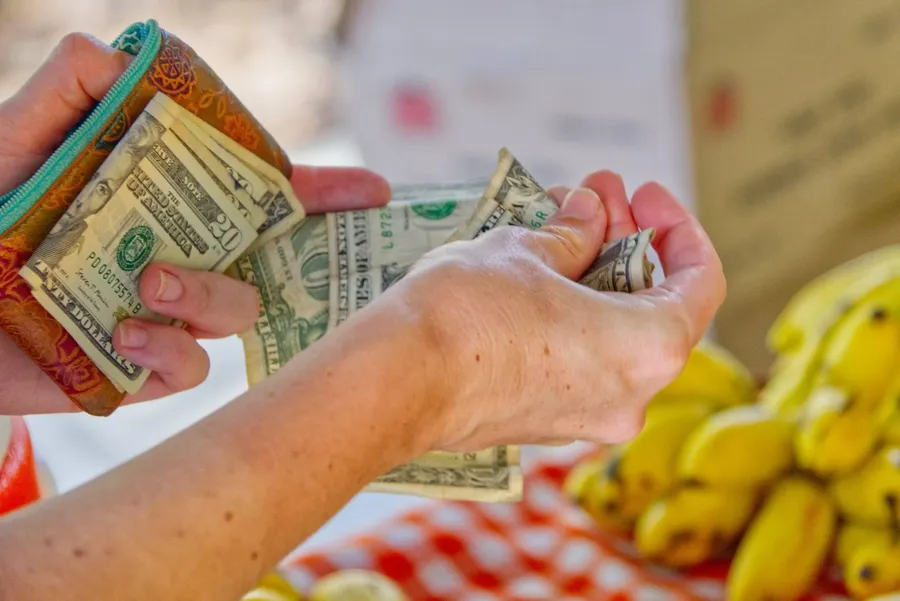
Typical Costs for a Family Trip to the Marshall Islands
Every family travels differently, so creating one precise holiday budget is nearly impossible. Nevertheless, you can estimate your own costs using the typical prices below and our complete Marshall Islands Travel Budget: How Much Does a Trip to the Marshall Islands Cost?.
Child pricing in the Marshall Islands is not especially complicated, mainly because it is not widely used. Many activities charge the same per-person rate regardless of age, while the departure tax does not have a reduced child price.
There are a few exceptions, as discussed in the sections below.
The Cost of Accommodation
Accommodation rates generally cover the whole room, apartment or holiday home, making them easier to budget for than per-person pricing. Families can often use existing beds or add an extra bed without paying much more.
Some larger units include several guests in the standard rate and only charge once the booking exceeds a high occupancy, sometimes around eight people. Where an extra charge applies, expect approximately US$20 per additional bed.
- Basic hotel room with shared bathroom/night - US$50-$90
- Economy hotel room with ensuite/night - US$90-$100
- Standard hotel room with ensuite/night - US$110-$145
- Mid-range hotel room or suite/night - US$125-$265
- Self-catering apartment/night - US$250
- Outer-island basic room/night - US$45
- Outer-island cottage or bungalow/night - US$150-$350
- Luxury private-island accommodation/night - US$860-$1,250
Always confirm the maximum occupancy, existing beds and extra-bed policy before booking. A room described as sleeping four may mean two double beds rather than separate beds for each family member.
The Cost of Food
Restaurants usually charge children individually, although dedicated children’s menus are available at several family-friendly venues in Majuro. Children’s meals generally cost around US$3-$9 and include familiar options such as nuggets, grilled cheese, fish fingers, burgers, pancakes or ramen.
- Street food or barbecue plate - US$3-$8
- Kids' menu meal - US$3-$9
- Main breakfast meal - US$5-$18
- Main lunch meal - US$6-$16
- Main dinner meal - US$8-$35
- Small coffee - US$1-$4.50
- Bottle of beer - US$2.75-$5.50
- Cocktail - US$7-$12
- Bottled water - US$1.50-$2.
See Marshall Islands Travel Budget: How Much Does a Trip to the Marshall Islands Cost? for more food prices.
Larger portions can sometimes be shared between younger children, while self-catering may work out better for longer stays or families with specialist dietary requirements.
The Cost of Transport
Transport is where child pricing varies most. Shared taxis generally charge per passenger, although some drivers do not charge small children sitting on a parent’s lap.
Treat this as an informal courtesy rather than a guaranteed fare rule and ask the driver before setting off.
Domestic child fares with Air Marshall Islands are usually around 44%-50% of the adult fare. However, there is no reduced child rate for the departure tax, so budget US$25 for every departing family member.
- Shared taxi around Delap, Uliga and Djarrit/person/one-way - US$3 (small kids sometimes go free)
- Taxi between town and the airport/person/one-way - US$8-US$15
- Compact car or sedan rental/day - US$65-$75
- Private-island boat transfer/person/one-way - US$20-US$30
- Majuro-Arno passenger boat/person/one-way - US$20
- Domestic flight from Majuro/person/one-way - US$185-$270
- Domestic child airfare: Around 44%-50% of the adult fare
- Departure tax/person: US$25.
Some rental companies provide a child seat free of charge when requested in advance. Child seats are not normally fitted as standard, so confirm availability when booking.
The Cost of Activities
Reduced child prices are not common for tours, boat trips or equipment rental. Unless a provider specifically advertises a family or child rate, assume each participating child will pay the normal per-person price.
Several of the country’s best family activities are free, including museums, historical sites, parks and shore-snorkelling spots when you bring your own equipment. Laura Beach is one of the clearer exceptions, with separate adult and child entry prices.
- Museum entry - Free, donations appreciated
- Laura Beach/adult/child - US$2/$1
- Snorkelling gear rental/day - US$15
- Traditional canoe ride/person - US$20
- Eneko Island day trip/person - US$40
- Group sightseeing tour/person - US$45
- Snorkelling trip aboard a dive boat/person - US$100
- Two-tank dive with equipment/person - US$230
- Full-day fishing charter/boat - US$900-$1,250
For more low-cost fun, check out the 15 Free & Cheap Things to Do in the Marshall Islands.
Spending Money for the Marshall Islands
Here are a few averages for a daily budget for the Marshall Islands. These include food, activities, transport and miscellaneous expenses. Each price is per person per day:
- Budget daily budget: US$50
- Mid-range daily budget: US$230
- Luxury daily budget: US$620+
We break down the budgets further in Marshall Islands Travel Budget: How Much Does a Trip to the Marshall Islands Cost?
More About Planning a Family Holiday to the Marshall Islands
That's it for our complete travel guide to the Marshall Islands for families, but it is by no means the end of our Marshall Islands advice! Check out the following articles for more tips for families:
- 30 Tips for Your Family Marshall Islands Vacation with Kids
- 10 Best Things to Do in the Marshall Islands with Kids
- 10 Fun Facts About the Marshall Islands
And if you simply can't get enough Marshall Islands wisdom, head over to 30 Tips for Travelling in the Marshall Islands.
Happy travels, and thanks for checking out this travel guide to the Marshall Islands for families!


-IC%26C%20CREDIT%20MarshallIslandsPocketGuide.com-900x601.webp?v=2026-07-22T07%3A36%3A53.643Z)