

-SEB%20CREDIT%20MarshallIslandsPocketGuide.com.webp?v=2026-07-09T19%3A05%3A42.805Z)
The Complete Sailing Guide to the Marshall Islands
With 29 coral atolls scattered across a vast stretch of the Pacific, the Marshall Islands is the sort of destination that makes even experienced sailors lean closer to the chart. Vast lagoons, remote communities and anchorages far beyond the usual cruising routes make this one of the region’s most rewarding sailing adventures.
It is not a destination for arriving unprepared, however. Visiting yachts must complete international clearance in Majuro or Ebeye, organise permits for each atoll and carry enough provisions, spare parts and patience for places where marine services are scarce.
This guide covers everything you need to know about sailing in the Marshall Islands, including clearing in and out, domestic cruising permits, outer-atoll supplies, moorings and the best places to explore by yacht.
For help planning your passage, see How Long Does It Take to Sail to the Marshall Islands?
This article is based on real on-the-ground research, not on AI scraping old content from the internet. Learn how we use AI!
Table of Contents
5 Quick Tips for Sailing in the Marshall Islands
- Send your arrival details well in advance, ideally 72 hours before arrival and again 48 hours before your ETA. Contact the Mieco Beach Yacht Club, Ports Authority, Sea Patrol, Customs, Immigration and Quarantine, as each agency may have slightly different advice on who should be notified first.
- Plan to clear in during weekday business hours, generally from 8 am to 5 pm Monday to Friday. Remain onboard under the quarantine flag until every department has cleared the yacht, and bring a generous supply of patience alongside the paperwork.
- Apply early for your atoll permits, as each atoll requires a separate Entry/Cruising Permit. Processing can take one to four weeks, so complete the forms before arrival where possible and carry several printed copies onboard.
- Stock up fully in Majuro or Ebeye, as food, fuel, spare parts and technical assistance are extremely limited on the outer atolls. Visiting crews should be ready to handle minor repairs independently and carry more provisions than they expect to need.
- Confirm access before setting a course, particularly for restricted or nuclear-affected atolls such as Bikini. Weather, local permission and permit conditions can change your plans, so keep the itinerary flexible and never assume that an anchorage is open to visiting yachts.
-SEB%20CREDIT%20MarshallIslandsPocketGuide.com.webp?v=2026-07-09T19%3A05%3A45.442Z)
Where to Sail in the Marshall Islands
The Marshall Islands is made up of 29 atolls and five isolated islands scattered across a huge stretch of the Pacific. In theory, almost every atoll offers somewhere new to explore, but permits, resupply and limited local facilities mean some destinations are far more practical than others.
Most visiting yachts begin in Majuro, where crews can complete clearance, collect atoll permits and stock up before sailing farther afield. For an overview of the country’s island groups, see The Atolls of the Marshall Islands & The Best to Visit.
Majuro Atoll
Majuro Atoll is the easiest place to begin exploring by yacht. Sheltered lagoon waters, access to supplies and the local sailing community make it a useful base while waiting for permits or preparing for an outer-atoll voyage.
Nearby islands include Eneko and Enemanit, where the local yacht club maintains moorings. Eneko is the more developed option, with regular visitor traffic, while Enemanit offers a quieter and more private escape.
There's plenty to explore when it comes to Majuro, so be sure to check out The Complete Travel Guide to Majuro and 30 Best Things to Do on Majuro.
Arno Atoll
Located close to Majuro, Arno Atoll is one of the most accessible outer-atoll destinations for visiting boats. Its proximity makes it a sensible first voyage before attempting longer passages through the Ratak or Ralik chains.
The atoll has numerous islets, lagoon channels and settlements spread across a wide area, so confirm your intended landing point and local permission before departure.
Jaluit and Wotje
Jaluit Atoll and Wotje Atoll are among the more established outer-atoll destinations. Both support larger communities than many remote atolls, along with schools, basic accommodation and slightly better access to local services.
They still offer a very different experience from Majuro, with historic sites, traditional communities and vast lagoons to explore. However, yacht crews should remain self-sufficient and arrive with food, fuel, spare parts and local permits already organised.
Rongelap and Rongerik
Rongelap Atoll is one of the more practical remote destinations from a permit perspective, as its local government office is reportedly efficient at processing cruising requests.
Nearby Rongerik Atoll is much less developed and has a particularly wild, untouched character. It was never permanently settled on the same scale as many other atolls, making it appealing to experienced crews looking for genuine isolation.
These are remote cruising grounds with extremely limited support. Carry adequate supplies, communications equipment and repair gear, and do not expect assistance to arrive quickly when something goes wrong.
Bikini Atoll
Bikini Atoll has extraordinary historical and underwater significance, but access is restricted and should never be assumed.
Tourism arrangements have changed over time, and visiting yachts need explicit written permission before sailing there. Confirm the latest permit conditions, local fees and whether private yacht visits are currently accepted.
Choosing an Outer-Atoll Route
Your route will depend as much on permits, weather and supplies as personal preference. Start with destinations where access has been confirmed, then build enough flexibility into the itinerary for delayed approvals or changing conditions.
For passage estimates, see How Long Does It Take to Sail to the Marshall Islands? For permits, resupply and outer-atoll formalities, refer to the "Domestic Cruising in the Marshall Islands" section of this guide.
Clearing Customs for Yachts in the Marshall Islands
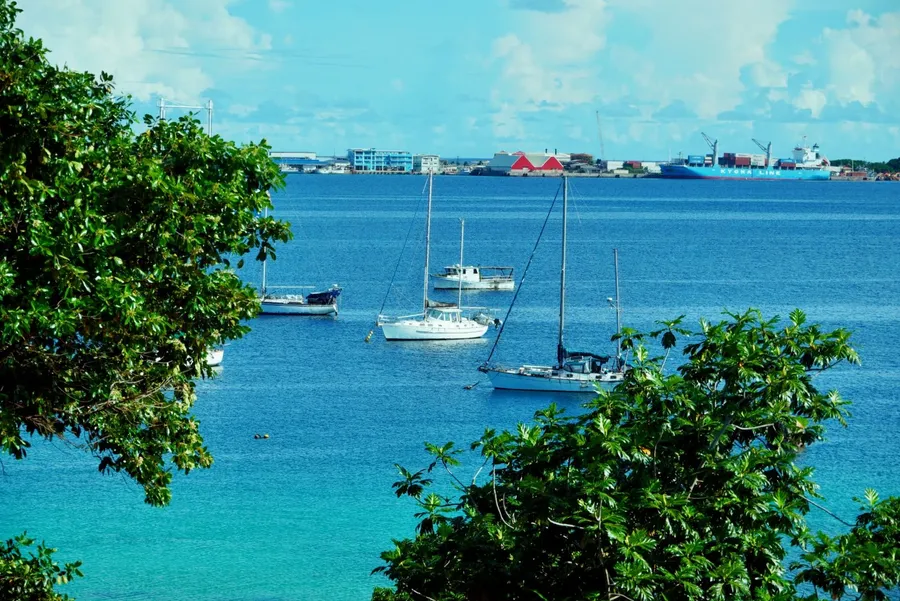
Yachts arriving from overseas must complete clearance before anyone goes ashore or the vessel continues to another atoll.
After interviewing the relevant authorities and Mieco Beach Yacht Club, we found that each had slightly different advice on who should be contacted first. The safest approach is to notify the Yacht Club and all clearance agencies well in advance, then keep following up until your arrival has been acknowledged.
Advance Notification Before Arrival
Send your anticipated arrival information by email at least 72 hours before reaching the Marshall Islands. Send another update 48 hours before your estimated arrival time.
When emailing while underway is not possible, send the notification before departing your previous port. You may not receive a reply, but the notification should still be sent.
Email the following agencies:
- RMI Ports Authority: rmiports@gmail.com
- Sea Patrol: surveillancermipaq@gmail.com
- Customs: mof.rmicustoms@gmail.com
- Immigration: majuro.doi@gmail.com or rmi_majuro@rmiimmigration.org
- Quarantine/Biosecurity: rmiquarantine@gmail.com
Also, contact Mieco Beach Yacht Club, which can pass your schedule to the Port Authority and help alert the officials forming the boarding party.
Include the following information in your email:
- Anticipated arrival date and time
- Boat name
- Description of the boat
- Captain’s name
- Number of crew
- Port or country of departure
- MMSI number, when applicable
Requirements can change, so reconfirm the process before beginning your passage.
Ports of Entry in the Marshall Islands
There are two official ports of entry for visiting yachts:
- Majuro
- Ebeye, Kwajalein Atoll
You must clear in at one of these ports before sailing elsewhere in the Marshall Islands. Ebeye has satellite offices handling Immigration, Customs, Quarantine and port clearance.
You can later clear out through either Majuro or Ebeye. It does not need to be the same port where you entered. Learn more in the "Clearing Out in the Marshall Islands" section below.
Yacht Clearance Process in Majuro
Clearance experiences vary considerably. Some crews are cleared aboard within a few hours, while others may wait a day or two or be asked to visit the government offices ashore.
Officials may also be occupied with international flights or cargo-terminal duties. Patience is not technically listed among the required documents, but it certainly helps.
Plan to arrive during normal business hours, from 8 am to 5 pm Monday to Friday. Most offices close from 12 pm to 1 pm, while weekend and public holiday clearance may be unavailable or attract overtime charges.
On approaching the Majuro Atoll pass, hail the Ports Authority and Sea Patrol on VHF Ch.16. Immigration and Customs may also be contacted through this channel, although receiving no reply is fairly common.
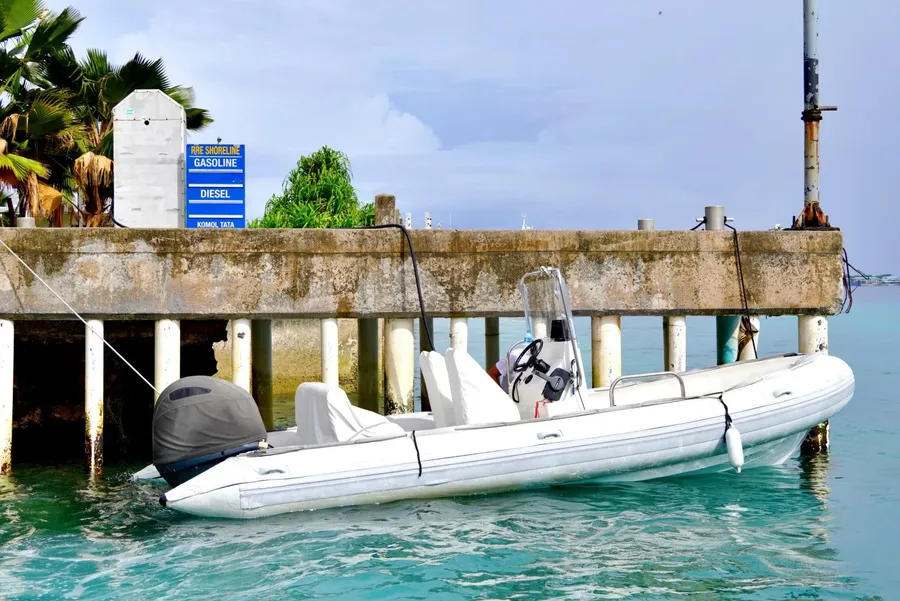
Proceed directly to the designated anchorage or mooring area between the Shoreline Dock and Delap Park. Do not anchor elsewhere in the lagoon and especially avoid Uliga Dock.
Once securely anchored or moored, contact Customs and Immigration to arrange clearance aboard your vessel. The arriving crew and captain must remain onboard under the quarantine flag until every department has completed clearance.
The agencies are generally handled in the following order:
- Ports Authority, which coordinates the arrival and vessel clearance
- Immigration, which clears the skipper, crew and passengers
- Customs, which processes the vessel and goods declarations
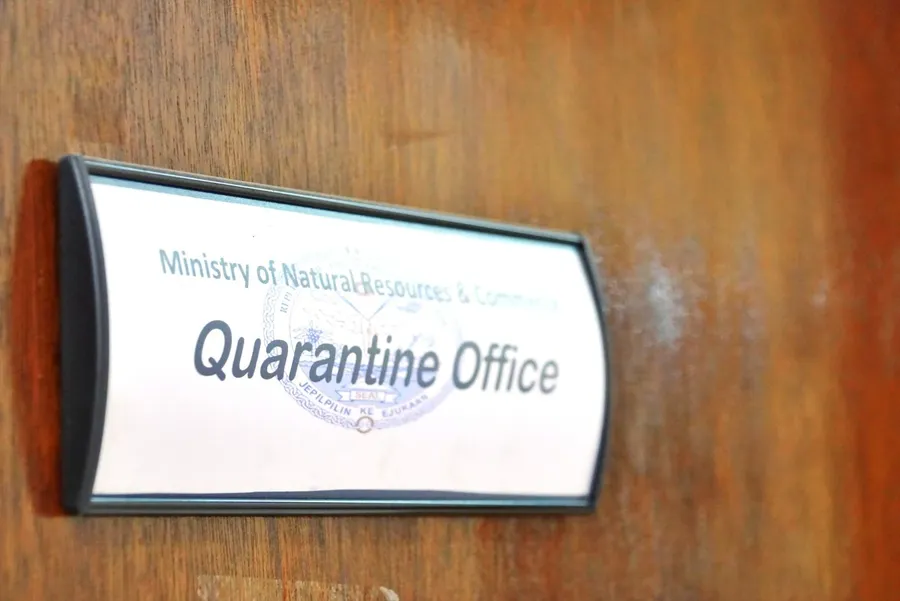
- Quarantine, which inspects food, plants, animals and other biosecurity risks
Officials will often organise a boarding party to visit the yacht. Continue contacting the authorities by VHF or email when there is a long delay, as a polite reminder can work wonders.
You may instead be asked to complete clearance ashore. Take your dinghy to the floating dock at Shoreline, then travel to the relevant government offices.
Prepare your vessel documents, passports, crew details and declarations in advance. Customs paperwork should be completed and ready for the boat stamp, while health declaration cards supplied on arrival must be completed by the captain and crew.
Any clearance fees must be paid in US currency. We list the island's three ATMs in Can You Use Your Credit or Debit Card in the Marshall Islands?, although it is sensible to carry enough cash before beginning the process. There is no currency exchange in Majuro.
Clearance and Overtime Fees
The Ports Authority does not charge an entry fee. Visa fees, late-notification penalties and overtime charges may still apply.
Possible charges for clearance outside normal business hours include:
- Immigration: US$100
- Customs: US$100
- Quarantine: US$75
A yacht that does not provide at least 24 hours’ notice may also face a US$150 non-compliance fee.
These charges are not applied consistently in every case, so confirm the expected total before requesting weekend, public-holiday or after-hours clearance.
-SEB%20CREDIT%20MarshallIslandsPocketGuide.com-900x601.webp?v=2026-07-09T18%3A49%3A17.004Z)
Immigration and the Cruising Visa
Many nationalities receive a visa on arrival for stays of up to 90 days. Check the current visa-on-arrival list before sailing, as the arrangement depends on each crew member’s nationality and intended stay.
For a longer visit, ask Immigration about the C-1 Cruising Visa. This single-entry visa applies to people entering aboard a private sea vessel, remains valid for up to 12 months and costs US$200.
For more information, see Marshall Islands Tourist Visa: Do You Need a Visa to Visit the Marshall Islands?
Customs Declarations for Visiting Yachts
Declare agricultural products, animals and valuable equipment carried aboard. Prohibited goods include e-cigarettes, marijuana and firearms.
Temporary imports, such as professional cameras or equipment that will leave with you, must also be declared. Customs may require a security bond equal to 8% of the item’s value, which is refunded when the equipment is exported.
Have your paperwork organised and easy to reach. Clearance is rarely improved by discovering the crew list beneath several months’ worth of spare parts and tinned food.
More about customs declarations can be found in Arriving in the Marshall Islands: Airport Customs, Biosecurity & Arrival Process, with much of this information also applying to yachties.
Quarantine and Biosecurity
Declare all pets, fresh food, fruit, plants, seedlings and agricultural products aboard the yacht.
Pets require current vaccinations and an import permit. Apply through rmi.quarantine@gmail.com.
Fresh food can generally remain aboard, but it must still be declared. Fresh fruit requires an import permit, while plants and seedlings need both an import permit and a phytosanitary certificate.
Again, a broader overview of arrival restrictions can be found in Arriving in the Marshall Islands: Airport Customs, Biosecurity & Arrival Process.
Government Offices in Majuro
The Ports Authority (7.08424, 171.36416) is located along the main road at Delap Dock.
Customs (7.08603, 171.37362) is on the ground floor of the Ministry of Finance Building, opposite the Marshall Islands Resort in Delap. Enter through the front door and ask for the Customs office.
Immigration (7.08428, 171.36873) is next to ELM Motors. It is a short walk from Customs on the same side of the road.
Government departments occasionally relocate, so confirm the office locations by radio, phone or email before leaving your yacht.
Domestic Cruising in the Marshall Islands
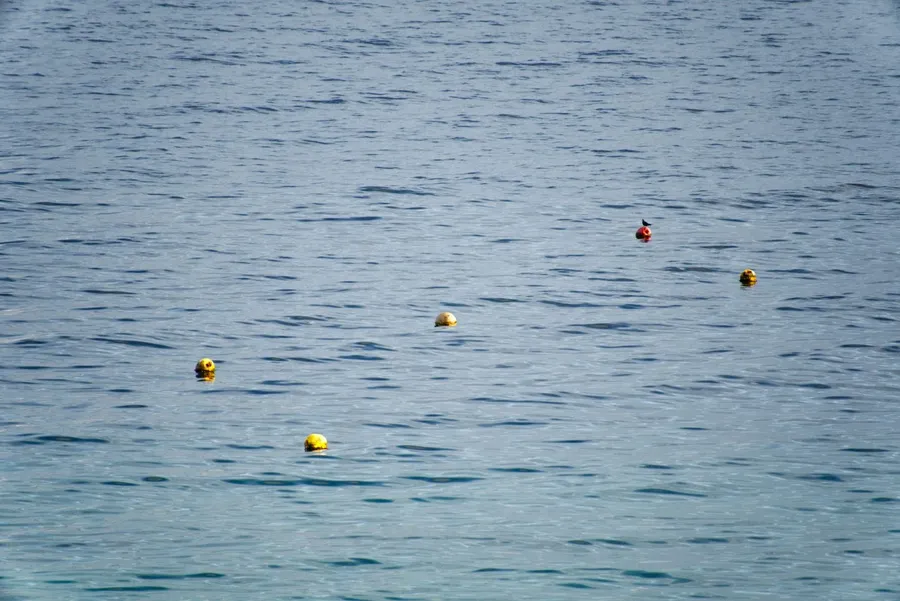
That’s right, after completing international clearance, you need a separate Entry/Cruising Permit for each atoll you intend to visit. But trust us, the chance to explore some of the Pacific’s most remote communities is well worth the mild paperwork workout.
Atoll Permits
Apply for atoll permits through the Office of Internal Affairs, part of the Ministry of Culture and Internal Affairs (7.102869360757073, 171.3770485514867) in Majuro. The office works with each atoll’s mayor and local government to process applications.
You will need an application for every atoll you plan to visit, then complete and submit each permit separately. Start the process well in advance, as approval can take anywhere from one to four weeks and officials may need regular reminders by email or in person.
Each application should include your intended arrival date, length of stay and approximate departure date. The dates are generally flexible, although visits are normally limited to a maximum of two months.
Permit fees vary between atolls, ranging from free to around US$100 per visit in many cases. You will be told whether payment must be made in Majuro or directly to the local government after arrival.
A permit is valid for one visit only. If you leave an atoll and later return, you must apply again and pay any applicable fee a second time.
Permits for Rongelap, Rongerik, Ailinginae and Bikini
Permits for Rongelap, Rongerik and Ailinginae are arranged through the Rongelap local government office rather than the standard atoll-permit process. A single permit may cover all three atolls, with a fee payable when applying.
This office is reportedly one of the more efficient places to obtain permission, although it is still wise to allow several days for signatures and stamping.
Access to Bikini Atoll is much more restricted. Do not assume that the atoll is open to visiting yachts, and obtain explicit written permission before including it in your sailing plans.
Bikini permits may involve a substantially higher daily fee than other atolls, so confirm the current cost and access conditions directly with the Kili, Bikini, Ejit (KBE) Local Government Building (7.108370271790618, 171.37202814816055).
Arriving at an Outer Atoll
Your first stop should be the main village on the atoll’s principal inhabited island. Ask to meet the mayor or acting mayor, present your permit and pay any local fee that was not collected in Majuro.
Carry at least two printed copies of your permit and bring the exact amount of cash required. Ask the mayor or acting mayor to sign or stamp your copy, as this provides proof of permission and payment if you visit another community on the same atoll.
Some visiting crews also volunteer to carry urgently needed supplies from Majuro. This is a practical way to help the community and introduce yourself.
Keep copies of your vessel clearance and all atoll permits onboard throughout your voyage.
Supplies on the Outer Atolls
Resupply options beyond Majuro and Ebeye are extremely limited. Cargo ships may visit the most remote atolls only occasionally, while domestic aircraft have little room for fuel, equipment or bulk provisions.
Stock up fully before leaving Majuro or Ebeye. Ebeye has a Triple J Payless supermarket, while Majuro offers the country’s widest choice of groceries, fuel, hardware and other supplies.
Repairs, Spare Parts and Dry Dock Facilities
There is no dedicated marine technical support for private yachts on the outer atolls. Services are also limited in Majuro, so visiting crews should be prepared to carry out repairs independently.
Majuro receives United States mail, and virtual post office boxes can be arranged by yachties who need parts shipped into the country. Allow plenty of time, particularly when waiting for specialised marine equipment.
The nearest major dry dock facilities are in Suva, Fiji and Manila, the Philippines. Plan any substantial haul-out or repair work before beginning an extended cruise through the outer atolls.
-SEB%20CREDIT%20MarshallIslandsPocketGuide.com.webp?v=2026-07-08T19%3A48%3A44.144Z)
Clearing Out of the Marshall Islands
You can clear out of the Marshall Islands through either Majuro or Ebeye. It does not need to be the same port where you originally entered.
Advance Departure Notice
Notify the relevant authorities at least 24 hours before your intended departure. Include the vessel name, captain’s name, crew details, estimated departure time and next port of call.
Failure to comply with the 24-hour notification requirement may result in a US$150 non-compliance fee.
Complete the process during normal government hours wherever possible. Offices generally operate from 8 am to 5 pm Monday to Friday and may close for lunch. Note that out-of-hours clearance fees (see "Clearing Customs for Yachts in the Marshall Islands" section above) may apply.
Preparing for International Clearance
Bring your passports, vessel papers, crew list, original arrival documents and any Customs declarations or security-bond receipts. Check that names, passport numbers and vessel details are spelled correctly on every form before leaving each office.
Outward Clearance Process
The practical outward-clearance sequence is generally:
- RMI Ports Authority, to pay the US$10 yacht departure fee and receive a clearance receipt
- Customs, to stamp the receipt, complete the vessel paperwork and reconcile declared goods
- Immigration, to process the passports and final departure documents
The Ports Authority departure fee is payable in cash.
Officials may occasionally direct you through the offices in a different order, so follow the instructions given on the day. Government paperwork enjoys the occasional change of tack too.
Final Yacht Inspection
A departure boarding party of government officials may visit the yacht after the office formalities are complete. The vessel may be inspected and the original arrival documents compared with the outward-clearance paperwork.
Once all inspections and paperwork are complete, an outbound clearance document will be issued.
Departure Deadline
Yachts generally have 24 hours to leave Majuro or Ebeye after receiving outward clearance.
Speak with the authorities if weather, mechanical trouble or another unexpected issue prevents departure within that period. Do not simply remain in port without updating them.
Customs Bonds and Declared Equipment
Tell Customs about temporary imports declared on arrival, including professional cameras, tools or other high-value equipment.
Any security bond paid when entering the country should be reconciled before departure. Carry the original declaration and receipt, and be prepared to show that the equipment is leaving aboard the yacht.
Crew Departing by Air
Crew members flying out instead of leaving aboard the yacht must complete the normal airport departure process, as outlined in Leaving the Marshall Islands: Departure Tips & Checklist.
For further information about charges, see Marshall Islands Tipping & Tax Guide for Travellers.
More About Sailing in the Marshall Islands
That's it for our complete guide to sailing in the Marshall Islands. More tips for travellers arriving by yacht can be found in the following guides:
- The Duty-Free Allowances for the Marshall Islands
- Marshall Islands Transport Guide: 10 Best Ways to Get Around the Marshall Islands
- Information, Shops & Services in Majuro
Finally, plan your whole trip to the Marshall Islands using The Complete Travel Guide to the Marshall Islands and the 30 Tips for Travelling in the Marshall Islands.

-SEB%20CREDIT%20MarshallIslandsPocketGuide.com-900x506.webp?v=2026-07-09T19%3A04%3A13.056Z)