-SEB%20CREDIT%20MarshallIslandsPocketGuide.com.webp?v=2026-07-09T18%3A30%3A02.170Z)
Interesting Facts About the Marshall Islands
Fun facts about a string of atolls so small you'd struggle to find them on a map… sound intriguing? Here's what makes the Marshall Islands so fascinating. We've pulled together some of the quirkiest, most surprising facts about this remote Pacific nation, so let's get into it.
This article is based on real on-the-ground research, not on AI scraping old content from the internet. Learn how we use AI!
Table of Contents
1.Marshallese Love Acronyms (MLA)
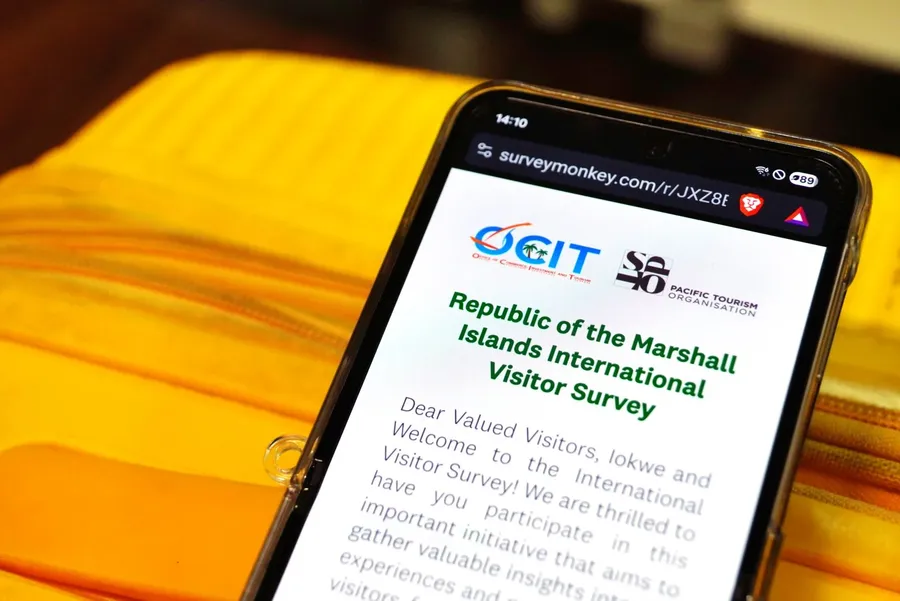
If there's one thing you'll notice in the Marshall Islands, it's that everyone seems to speak in acronyms. Locals casually throw around abbreviations like RMI (Republic of the Marshall Islands), MEC (Marshalls Energy Company), BOG (Bank of Guam) and BOMI (Bank of the Marshall Islands) as if everyone has the cheat sheet.
It doesn't stop there. You'll also hear OCIT (Office of Commerce, Investment and Tourism), CMI (College of the Marshall Islands), USP (University of the South Pacific) and countless others in everyday conversation. Even taxi drivers expect you to know many of them, so asking to go to "NTA" instead of the National Telecommunications Authority will probably get you there faster.
Don't worry if you're confused at first. After a few days in the Marshall Islands, you'll likely find yourself speaking in acronyms too (whether you meant to or not!).
2.Bikini Atoll Has “Mutant” Sharks
Residents of Bikini Atoll still cannot safely return to live on the land in the same way their ancestors did because radioactive contamination remains in parts of the local food supply. Coconut crabs, coconuts and other foods can absorb radioactive material from the soil, meaning the effects of the nuclear tests continue through the food chain.
Then there are the sharks. Researchers have reported nurse sharks around Bikini with only one dorsal fin (rather than the usual two, if you're not a shark nerd), an unusual feature that has helped fuel stories of “mutant sharks” in the lagoon.
Scientists have not confirmed that radiation caused the deformity, so the explanation remains uncertain. Still, an irradiated atoll filled with one-finned sharks sounds less like a travel fact and more like the opening scene of a creature feature.
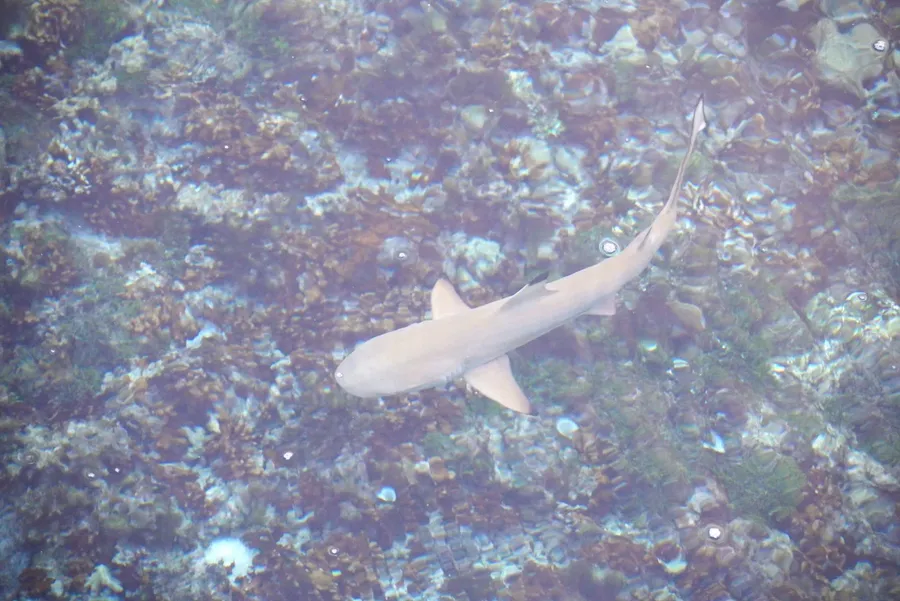
Above is not a photo of a mutant shark, because getting to Bikini Atoll to take photos of mutant sharks is a jurisdictional nightmare, but this cute reef shark in Majuro will have to do.
3.They Hosted 67 Nuclear Bomb Tests
-IC%26C%20CREDIT%20MarshallIslandsPocketGuide.com-900x601.webp?v=2026-07-09T19%3A14%3A42.929Z)
The Marshall Islands were the site of 67 US nuclear weapons tests between 1946 and 1958, mostly at Bikini Atoll and Enewetak Atoll. Among them was the Castle Bravo test in 1954, a 15-megaton hydrogen bomb that became one of the most powerful nuclear explosions ever detonated.
The tests had lasting consequences. Entire communities were displaced from their ancestral islands, while radioactive fallout affected people living far beyond the test sites. The legacy of the nuclear testing programme continues today, with environmental restoration, compensation and other issues still being addressed between the governments of the Republic of the Marshall Islands and the United States.
A good place to learn more about the history of the nuclear testing is at the Alele Museum, one of the 20 Free & Cheap Things to Do on Majuro.
4.The Islands Were Named After a British Captain
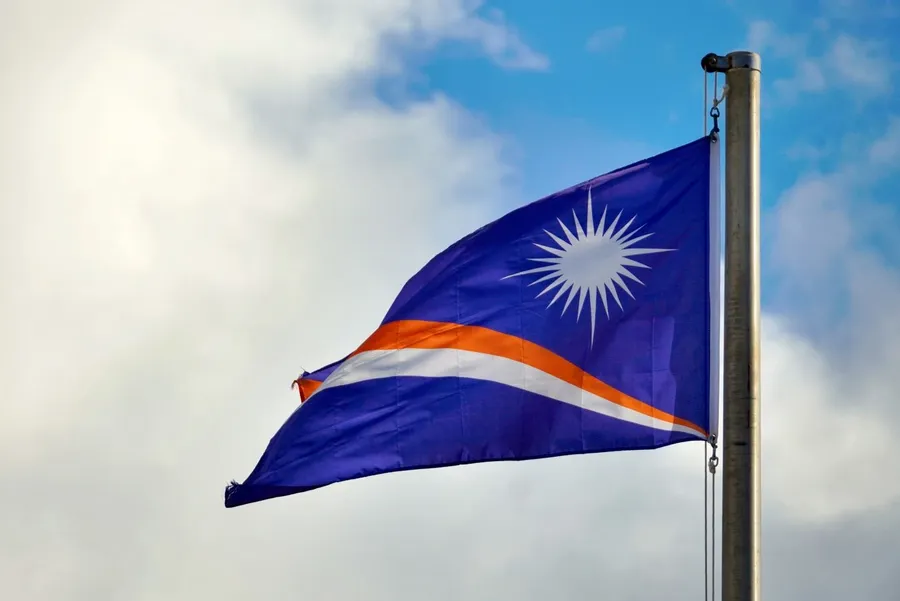
Despite the tempting story, Captain John Marshall did not sail through the Pacific and name an entire country after himself. He and fellow captain Thomas Gilbert passed through the region in 1788, but European mapmakers later named the island groups in their honour.
Marshall’s name became attached to the Marshall Islands, while the neighbouring Gilbert Islands were named after Gilbert and now form much of Kiribati. Neither captain appears to have requested the honour, but having whole island groups named after you is still a rather impressive souvenir from a sailing trip.
Bold move, lads, even if somebody else technically made it for them.
5.Marshallese Canoes Still Impress Modern Engineers
%20CREDIT%20MarshallIslandsPocketGuide.com-900x506.webp?v=2026-07-09T18%3A48%3A05.826Z)
Traditional Marshallese outrigger canoes use an asymmetrical hull, with one side flatter and the other more curved. This clever shape creates lift as the canoe moves through the water, helping it travel quickly while remaining remarkably stable.
European sailors were astonished by the speed and manoeuvrability of these canoes when they encountered them in the 1800s. The design developed over many generations without computer modelling, wind tunnels or even a suspiciously complicated instruction manual.
The technology is far from being confined to museums. Through the Low Carbon Sea Transport project, Waan Aelõñ in Majel, better known as WAM, has worked with the German development agency GIZ and marine specialists, including Henrik Richter-Alten, to adapt traditional proa and catamaran designs for modern passenger and cargo transport.
So, rather than replacing Marshallese sailing knowledge, today’s engineers are learning from it. Sometimes the old ways really do sail circles around the new ones.
You can even go for a sail on one of these canoes with WAM, as shown in the 5 Best Boat Tours in Majuro & the Marshall Islands.
6.They Navigated the Pacific With Sticks
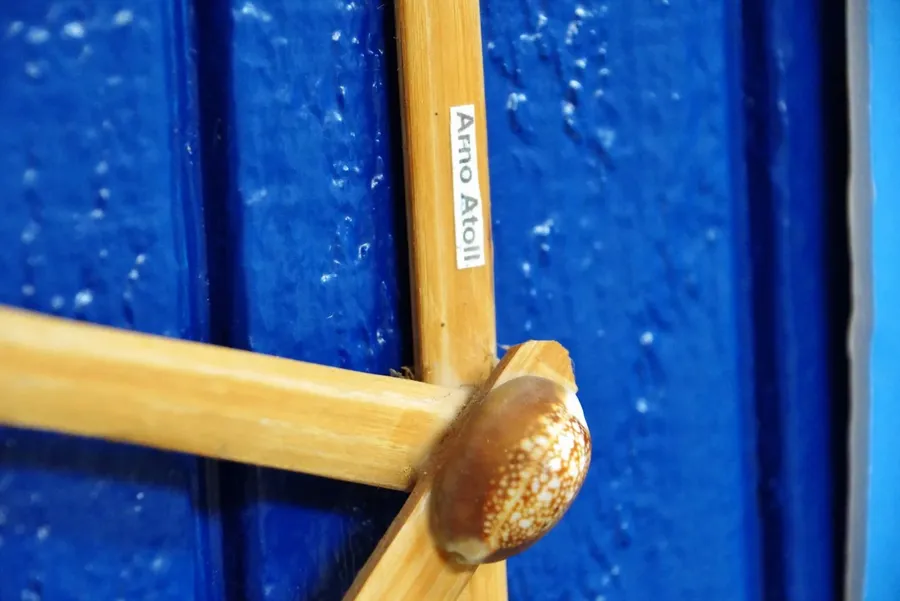
Long before GPS, Marshallese navigators used stick charts, ingenious maps made from thin sticks, coconut fibre and shells. The sticks represented ocean swells and how waves bend around islands, while shells often marked the islands themselves.
The charts were not usually taken to sea. Navigators studied them on land, memorised the patterns and then read the movement of the ocean from their canoe. Imagine learning an entire sea route from a handful of sticks, then setting sail without a little blue dot to reassure you!
Decorative versions are sold in handicraft shops, while larger examples and displays can be seen at the Alele Museum and Waan Aelõñ in Majel. They make striking souvenirs, although we probably wouldn’t recommend using one to navigate your flight home.
7.Jaluit Became Part of the Amelia Earhart Mystery
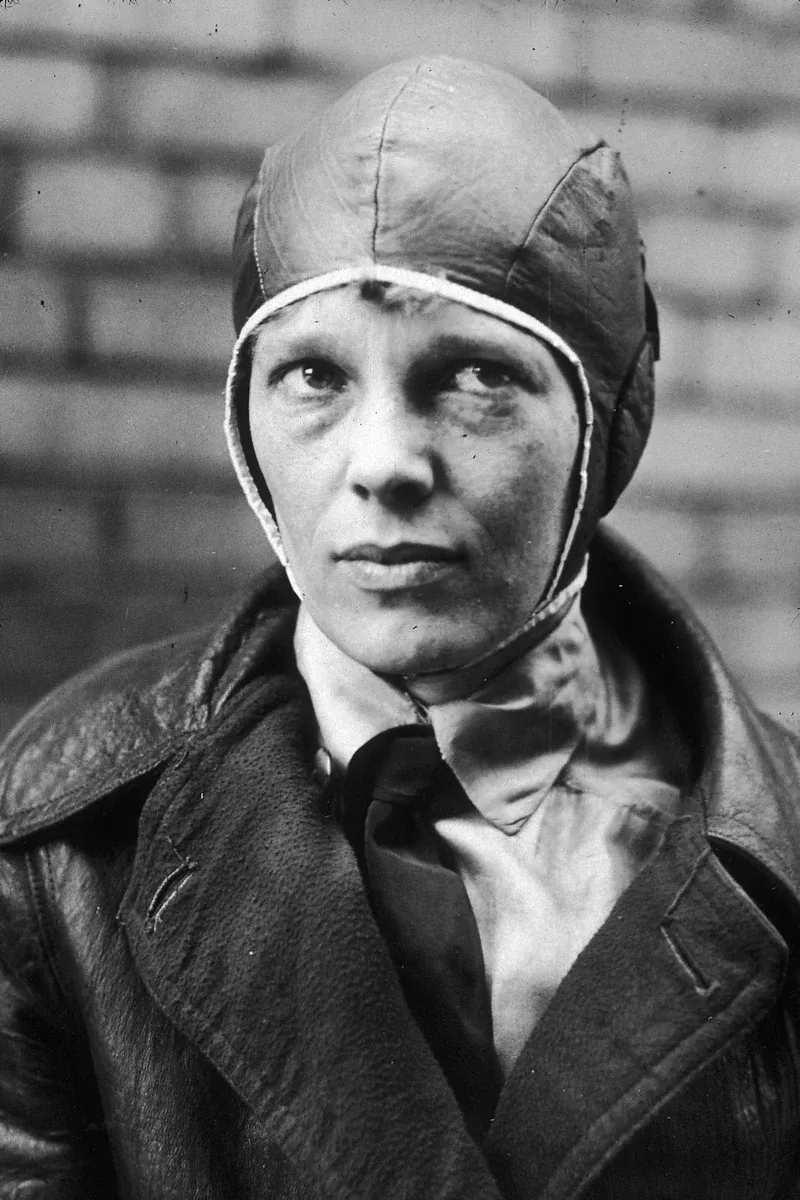
Jaluit Atoll has been linked to a disputed theory that aviator Amelia Earhart and her navigator, Fred Noonan, survived their 1937 disappearance and were later captured by Japanese forces.
Supporters of the theory pointed to an old photograph said to show Earhart sitting on the harbour wall at Jaluit, with Noonan standing nearby. It looked like a tantalising clue, until researchers found the same image in a book published in 1935, two years before the pair disappeared.
That discovery dealt the theory a rather awkward landing. Jaluit remains part of the Earhart mystery, but the famous photograph appears to prove little more than how quickly a blurry image can send history enthusiasts into overdrive.
8.“Handicrafts” Comes From a Japanese Word
-CUNL%20CREDIT%20MarshallIslandsPocketGuide.com-900x601.webp?v=2026-07-08T19%3A44%3A50.925Z)
The Marshallese often use the word amimono for locally made handicrafts, particularly woven items such as baskets, mats and decorative pieces. Surprisingly, the word is not originally Marshallese.
Amimono comes from Japanese and refers to knitted or woven work. It is thought to have entered everyday use during the period of Japanese administration in the early 20th century, then simply stayed put.
Today, amimono is closely associated with Marshallese craftsmanship, proving that words can travel between islands almost as easily as sailors do. The souvenirs are rather easier to fit in your luggage, though.
Check out some amimono in the 10 Best Souvenirs & Gifts From the Marshall Islands.
9.A Mat Was More Powerful Than a Passport
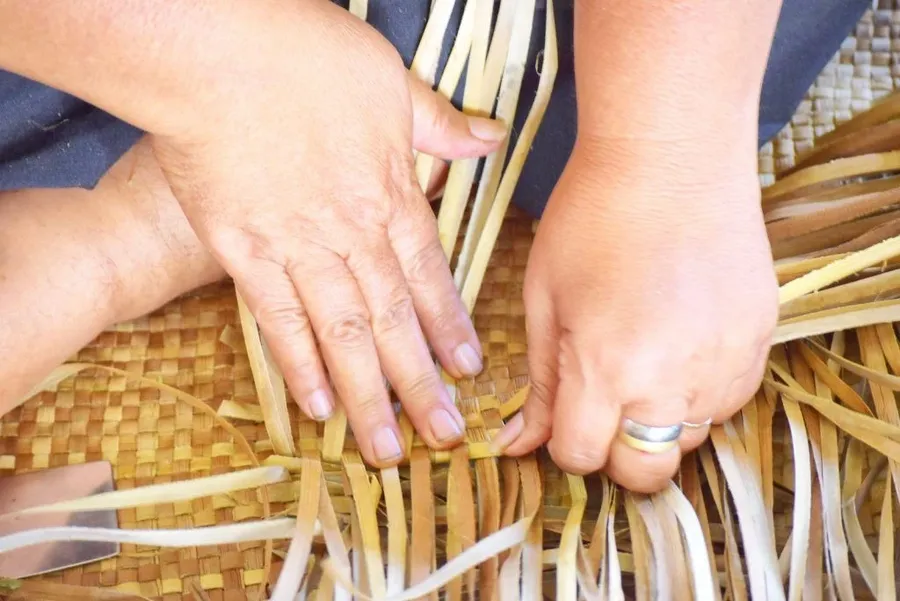
Finely woven Marshallese mats, including jāki-ed and nieded, once served as clothing, ceremonial gifts, canoe sails, food containers, wall coverings and even face coverings during tattooing. They were essentially the Swiss Army knife of Marshallese society, only considerably more elegant.
These mats also carried social and cultural importance, with the finest pieces exchanged during major ceremonies and passed between families. A beautifully woven mat could say a great deal about its maker, its owner and the occasion for which it was presented.
Since World War Two, the specialised knowledge needed to produce them has become increasingly rare. Weaving programmes and cultural organisations are now working to preserve the techniques, because some traditions are far too useful, and far too beautiful, to be folded away.
10.A Stone Was Believed to Help You Have a Daughter
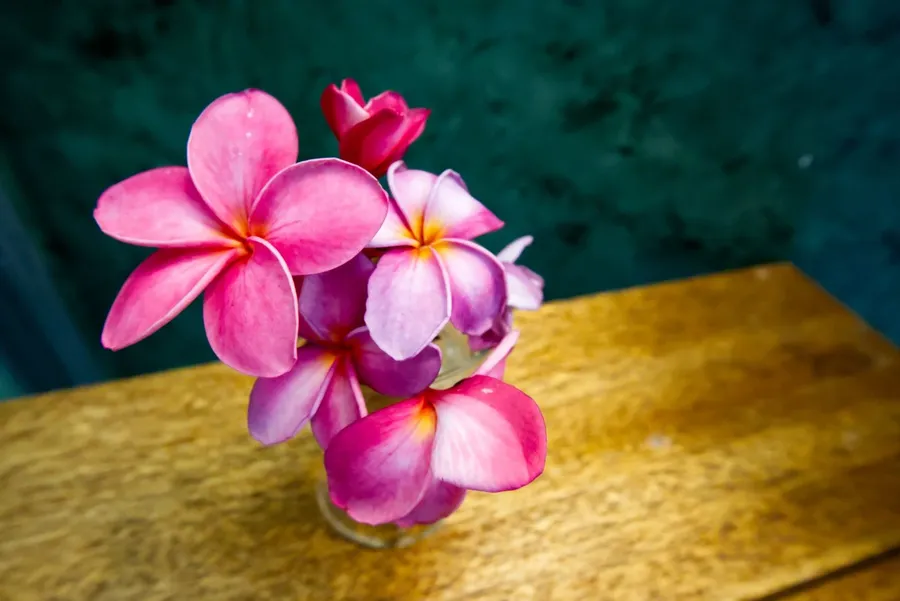
On Likiep Atoll, two stone idols known as Ledrikran were traditionally believed to help women conceive a girl. According to notes from the Alele Museum, a woman would search for a particular white shell called jinen bokbok, carry it with her and sleep with it resting on her stomach.
The practice was still being documented as recently as 1901, showing how spiritual beliefs were woven into everyday family life. No fertility clinic, no complicated forms, just a sacred stone, a white shell and a great deal of faith.
Whether it worked is another question, but as traditional family-planning methods go, it was certainly easier to remember than an appointment schedule.
More Fun Facts About the Marshall Islands
That's it for our list of fun facts about the Marshall Islands. For more interesting tidbits, check out more of our articles:
- 10 Things to Do in the Marshall Islands at Night
- Public Holidays in the Marshall Islands (& Other Important Dates)
- 15 Best Historical Sites in the Marshall Islands
Finally, learn more about the islands and a few quirks you need to be aware of when visiting in the 30 Tips for Travelling in the Marshall Islands.

-SEB%20CREDIT%20MarshallIslandsPocketGuide.com-900x633.webp?v=2026-07-23T03%3A25%3A07.979Z)