

-CUWL%20CREDIT%20MarshallIslandsPocketGuide.com.webp?v=2026-07-17T19%3A41%3A47.565Z)
A Marshall Islands Guide for Gluten-Free Diets and Coeliac Disease
Here we go again, another trip and another dietary minefield. The Marshall Islands is one of the more challenging Pacific destinations for gluten-free travellers, with almost no menus labelling gluten-free dishes and limited awareness of coeliac disease.
In Majuro, rice is easy to find, and many restaurants serve fish, eggs, vegetables and other foods that may appear naturally gluten-free. The difficulty lies in sauces, marinades, stock powders, shared fryers and regular soy sauce, so even a simple-looking meal requires a few careful questions.
Communication can also take patience, as not everyone working in restaurants speaks fluent English. Keeping requests short, explaining the exact ingredients you cannot eat and carrying a translated dietary card can make ordering considerably easier.
The challenge increases once you leave Majuro. Restaurants become scarce, not every accommodation serves meals, and outer-atoll stays may rely on set menus with little flexibility, although the rare resort welcomes speciality diets when arranged well in advance.
If you have coeliac disease or a serious gluten intolerance, self-catering and bringing trusted supplies are likely to be essential parts of your trip. This complete gluten-free guide to the Marshall Islands covers practical dining tips, accommodation considerations, supermarket shopping, self-catering and the restaurants that offer the best starting point for a safe meal.
This article is based on real on-the-ground research, not on AI scraping old content from the internet. Learn how we use AI!
Table of Contents
5 Tips for Gluten-Free Dining in the Marshall Islands
Before we get into the full guide, here is a quick summary of the most important things to know:
- Do not expect gluten-free labels on menus. Most restaurants in the Marshall Islands do not identify gluten-free dishes, so you will need to know which ingredients to avoid and ask specific questions before ordering.
- Bring your own gluten-free soy sauce, bread and snacks. Soy sauce is used widely in Chinese, Filipino, Taiwanese and Pacific-style cooking, while gluten-free substitute products can be difficult to find. Carrying a few reliable staples makes restaurant meals and travel days much easier.
- Assume there may be cross-contamination. Food that appears naturally gluten-free may still be prepared with shared knives, chopping boards, woks, fryers or cooking oil. Travellers with coeliac disease should explain that even small traces of wheat can cause illness.
- Contact your accommodation before booking. Do not assume every hotel or island resort serves meals, or that those offering food can cater for coeliac disease. Ask exactly what meals, kitchen facilities and dietary support are available before paying.
- Self-catering is usually the safest option. Majuro has several large supermarkets and a small selection of well-equipped apartments, making simple meals with rice, eggs, fish, vegetables, fruit and other naturally gluten-free staples relatively straightforward.
Rice is available almost everywhere, but remember that the sauce sitting beside it may be the real troublemaker.
-CUWL%20CREDIT%20MarshallIslandsPocketGuide.com-900x601.webp?v=2026-07-09T19%3A16%3A08.669Z)
Visiting the Marshall Islands with Coeliac Disease
Coeliac disease presents considerably more challenges than simply choosing to avoid gluten, and the Marshall Islands is one of the more difficult Pacific destinations for travellers who need to prevent both gluten and cross-contamination.
In our experience, no menus identify gluten-free dishes, staff may not be familiar with coeliac disease, and kitchens generally prepare wheat-based and gluten-free food in the same areas. Even a meal that appears naturally gluten-free may have been cooked with regular soy sauce, stock powder, shared utensils or oil previously used for battered food.
Communication can also be difficult, as not everyone working in restaurants speaks fluent English. We recommend carrying a clearly written dietary card explaining that you cannot eat wheat, barley, rye, regular soy sauce or food prepared with contaminated utensils and cooking oil.
Gluten-Free Food at Hotels and Resorts
Do not assume that every hotel, resort or guesthouse in the Marshall Islands serves meals. Many accommodations provide rooms only, particularly beyond the main population centres.
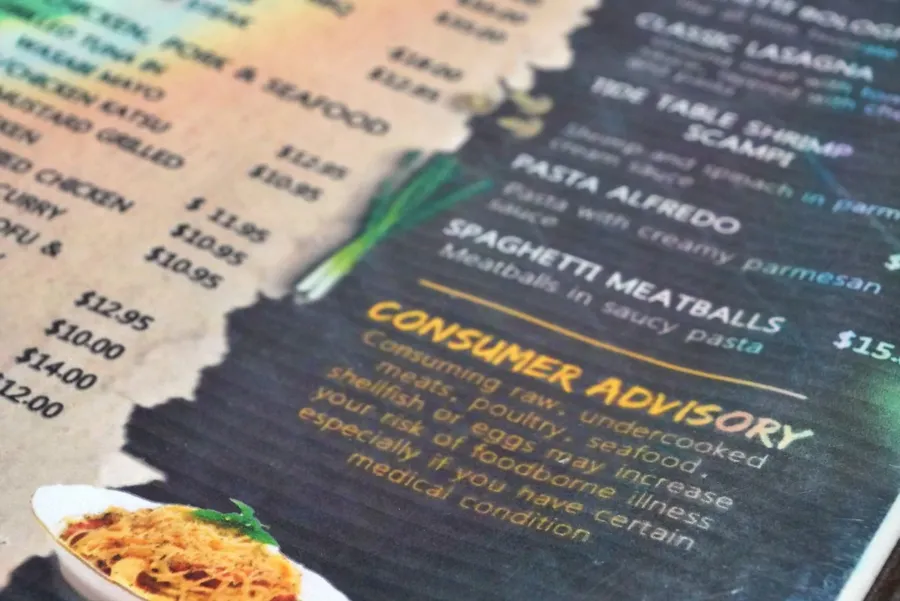
In Majuro, Hotel Robert Reimers and the Marshall Islands Resort are the main hotels with full restaurants. Hotel Robert Reimers’ Tide Table Restaurant & Lounge identifies vegan meals, but not gluten-free meals. In fact, they have the pictured disclaimer on their menu, which you can make of that what you will...
Neither hotel should be assumed to offer coeliac-safe meals without a detailed conversation beforehand. Contact the accommodation before booking, explain the severity of your requirements and ask whether the kitchen can use clean utensils, separate preparation surfaces and unopened ingredients.
Where possible, ask to speak directly with the chef rather than relying only on reception staff. A simple discussion on arrival can help, but advance notice gives the kitchen a much better chance of sourcing appropriate ingredients.
Gluten-Free Food at Island Resorts
Meal arrangements vary enormously at private-island and outer-atoll resorts, particularly where accommodation is offered with three set meals each day.
At one end of the spectrum, Bikendrik Island Resort in Majuro makes it clear that complicated dietary requests are not especially welcome, although vegetarian meals may be accommodated. Travellers with coeliac disease should therefore treat this as unsuitable unless the resort confirms otherwise in writing before booking.
At the other end, Beran Island Resort in Ailinglaplap Atoll states that specialty diets are welcome. Their in-house chef prepares dishes to suit different diets, with three meals served daily, snacks and coffee available around the clock and ingredients like vegetables grown in the resort garden.
The resort also asks guests about dietary requirements during the booking process.
The difference between these two resorts shows why advance communication is essential. “Meals included” can mean anything from carefully adapted dishes to a fixed menu with no practical alternatives.
Learn more about these stays in the 10 Best Resorts & Hotels in the Marshall Islands.
%20CREDIT%20MarshallIslandsPocketGuide.com-900x601.webp?v=2026-07-09T19%3A05%3A27.489Z)
Gluten-Free Food at Restaurants
Chinese and other Asian-style restaurants are common in Majuro, and rice is available with many meals. That certainly helps, but rice on the plate does not automatically make the entire dish gluten-free.
As you probably know, regular soy sauce usually contains wheat, while oyster sauce, marinades, soup bases and seasoning powders may also contain gluten. Fried rice and noodle dishes can be particularly difficult because the ingredients are often prepared in advance or cooked in shared woks.
Ask for plain steamed rice with simply grilled meat, fish or vegetables wherever possible. Confirm that no soy sauce, flour, breading, stock powder or shared frying oil will be used, and consider carrying your own gluten-free soy sauce if Asian food will make up a large part of your diet.
Keep questions short and specific rather than simply asking whether a dish is “gluten-free”, a term that may not be widely understood. Listing the exact ingredients you cannot eat is usually more effective.
Check out your restaurant options in the 10 Best Restaurants in Majuro & the Marshall Islands.
Cooking Your Own Gluten-Free Meals
For travellers with coeliac disease, self-catering is likely to be the safest option in Majuro. The capital has large supermarkets and several accommodations with basic cooking facilities, allowing you to control ingredients and reduce the risk of cross-contamination.
Rice, potatoes, fresh produce, canned beans, eggs, meat and fish are relatively easy to find. Specialist gluten-free substitutes are less dependable, however, so bringing sealed gluten-free bread, crackers, cereal, pasta and soy sauce may make the trip considerably easier.
Outside Majuro, both shops and self-catering facilities become much more limited. Confirm exactly what your accommodation provides before travelling, as “kitchen facilities” may mean anything from a full kitchen to a kettle and a shared refrigerator.
Check out some of your accommodation options in Where to Stay in the Marshall Islands: 12 Best Accommodations, as well as where to buy food in A Guide to Supermarkets & Food Shopping in the Marshall Islands.
Gluten-Free Self-Catering in the Marshall Islands
The biggest hurdle for gluten-free self-catering in the Marshall Islands is not finding naturally gluten-free food, but finding reliable gluten-free substitute products. Rice, potatoes, fresh fruit, vegetables, fish, eggs, coconut milk and canned staples are easy enough to build meals around, but gluten-free bread, pasta, flour and speciality snacks are much less dependable.
Self-Catering Accommodation
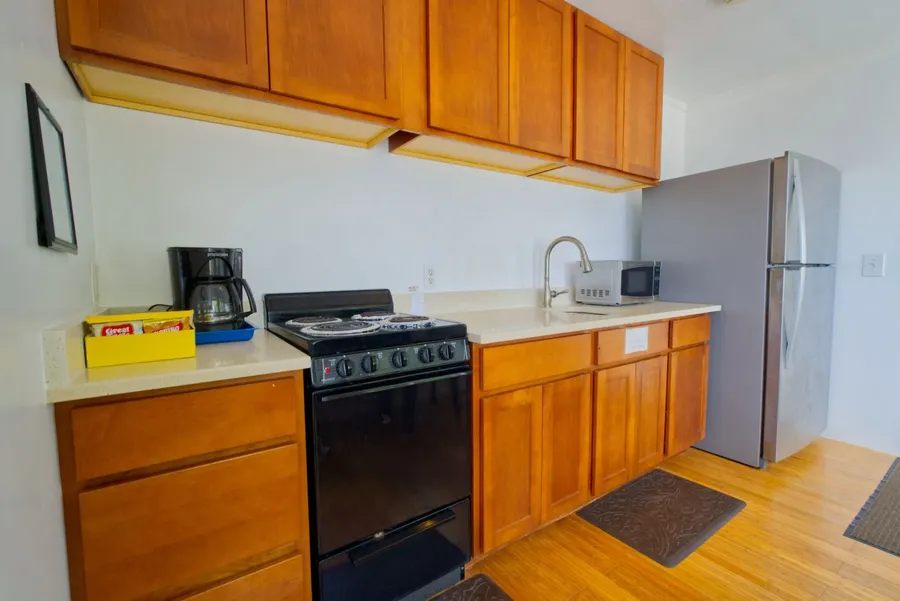
Self-catering accommodation is available in and around Majuro, although it is not standard in every hotel room. If you need to prepare your own meals safely, check room descriptions carefully and look for apartments, suites or beach houses with full kitchens or proper kitchenettes.
On the edge of town, Beach Lodge Hotel & Apartments and Lojkar Apartments & Hotel are among the best-equipped options for longer stays. Marshall Islands Resort also offers a suite with cooking facilities.
Farther west in Ajeltake, Ajeltake Beach House is one of the stronger choices for a well-equipped self-catering stay. Tuwaakin Beach Apartments also provides useful cooking facilities, although they are more limited.
Some island escapes have kitchens too. Eneko Island Getaway, for example, gives guests the option to prepare their own meals, which makes it much easier to manage a strict gluten-free diet away from town.
By contrast, Bokanbotin Island Resort does not provide a full kitchen, nor a restaurant. Guests have access to a microwave and a kettle, so bringing suitable ready-to-eat food or simple meals that only need reheating is the safest approach.
On the outer atolls, full kitchens are rare. Local accommodation may offer little more than a microwave, stovetop or shared cooking space, so ask exactly what is provided before booking rather than assuming “self-catering” means a complete kitchen.
-SEB%20CREDIT%20MarshallIslandsPocketGuide.com.webp?v=2026-07-09T19%3A03%3A47.350Z)
Where to Buy Gluten-Free Food
If you are comfortable cooking with naturally gluten-free ingredients, Majuro’s larger supermarkets make self-catering manageable. Rice, eggs, fish, fresh produce, canned beans, potatoes, noodles made from rice and other basic pantry items are usually available.
K&K Island Pride Supermarket (Delap and Long Island) is the best place to start for imported groceries and international brands. Its branches in have a broad range of packaged food, snacks, plant-based milks and pantry staples, with many products imported from Australia, Japan, the U.S. and elsewhere.
The variety is useful, but checking ingredient labels can take time, especially when products are unfamiliar or packaging is not in English. Gluten-free substitute products occasionally appear, but they are not consistent enough to rely on.
Payless Supermarket (Uliga) is another good option for rice, canned goods, vegetables and everyday cooking ingredients. Both Payless and K&K have substantial fruit and vegetable sections, although most produce is imported and freshness can vary.
For locally grown fruit and vegetables, head to the Local Market beside the Marshall Islands Resort (Delap). It is usually open from around 9 or 10 am to 5 pm Monday to Friday. Otherwise, Misco Market (Uliga) is a good option for local fruit, easily spotted from the roadside.
Chinese-run hole-in-the-wall shops stay open late or around the clock for emergency water, noodles and snack runs. On the outer atolls, expect an even more limited range, usually centred on rice, noodles, canned fish, eggs, drinks and whatever fresh produce is locally available.
For more about shopping in Majuro, check out A Guide to Supermarkets & Food Shopping in the Marshall Islands.
Bringing Your Own Gluten-Free Food to the Marshall Islands
Bringing your own food is strongly recommended for anyone with coeliac disease or severe gluten sensitivity. This is especially important if you rely on substitute products or plan to stay away from Majuro.
Useful items to pack include gluten-free bread or crackers, pasta, flour, cereal, soy sauce or tamari and safe snacks for travel days. Shelf-stable meals are also helpful for island stays where kitchen facilities may be limited to a microwave or kettle.
Before travelling, check the Marshall Islands’ customs and biosecurity requirements so you know what must be declared and what food can legally be brought into the country. This is particularly important for fresh produce, meat, seeds and unpackaged food.
For more arrival advice, see Arriving in the Marshall Islands: Customs, Biosecurity & the Airport Process.
-CUNL%20CREDIT%20MarshallIslandsPocketGuide.com-900x601.webp?v=2026-07-13T21%3A42%3A16.443Z)
5 Best Restaurants with Gluten-Free Food in the Marshall Islands
We need to be clear from the outset: none of the restaurants we visited in the Marshall Islands had dishes labelled gluten-free. The following restaurants are simply the best starting points for finding meals that may be adapted, rather than places we can guarantee are safe for people with coeliac disease.
Even when ordering rice, grilled fish, vegetables or sashimi, you will need to ask about soy sauce, marinades, stock powder, flour, shared frying oil and contaminated preparation surfaces. Communication may also take patience, so keep requests short, speak slowly and explain exactly which ingredients you cannot eat.
1. DAR Coffee Corner
A Majuro institution with more than 40 years of history, DAR Coffee Corner (Uliga) is a useful place to look for simple breakfasts and lunches. Omelettes can potentially be served with rice instead of toast, while plain tuna steak, sashimi and green salad may also work with careful adjustments.
Ask for no soy sauce, seasoning mix, bread or shared cooking oil, and confirm that the rice has not been flavoured with stock. Opening times can be a little flexible, so breakfast may occasionally depend on whether the chef has also decided it is breakfast time.
-CUNL%20CREDIT%20MarshallIslandsPocketGuide.com-900x601.webp?v=2026-07-13T21%3A42%3A24.922Z)
2. Riwut Restaurant
With local artwork, cosy booths and a broad all-day menu, Riwut Restaurant (Uliga) gives gluten-free diners more possibilities than many smaller eateries.
Potential options include vegetable or spinach omelettes with rice, plain sashimi, grilled reef fish and tuna steak. The "Local Combo" may also be adaptable, but you will need to ask about every side dish, as sauces, marinades and seasonings typically have at least one containing flour.
This is one of the better places to request a straightforward plate of grilled fish, rice and vegetables. Make it clear that you need everything prepared without soy sauce, flour, breading or shared frying oil.
3. Toeak Bar & Grill
Set at the top of Majuro’s tallest building, a title that sounds considerably grander once you see the skyline, Toeak Bar & Grill (Uliga) combines harbour views with a wide-ranging Pacific and American-style menu.
Plain sashimi, sautéed wahoo with rice, green salad and seared tuna salad are among the more promising choices. However, fish may be marinated in soy sauce and salad dressings can contain gluten, so ask for the fish plainly cooked and request dressing on the side.
The Hawaiian-style poke may look suitable, but it commonly contains soy sauce. Only order it after confirming the exact ingredients, and consider bringing your own gluten-free tamari if you plan on eating plenty of raw fish dishes.
%20CREDIT%20MarshallIslandsPocketGuide.com-900x601.webp?v=2026-07-09T19%3A15%3A58.322Z)
4. Enra Restaurant
Located at the Marshall Islands Resort, Enra Restaurant is one of Majuro’s most complete dining options, serving breakfast, lunch and dinner alongside its Dockside Bar.
Potentially suitable dishes include omelettes served without toast, plain tuna sashimi, seared tuna, fresh fruit and simply prepared meat or fish with rice. Some dishes, such as pepper steak and Hawaiian poke, may contain soy sauce or thickened sauces and should not be treated as gluten-free without checking.
Ask whether clean utensils and a separate preparation area can be used, particularly if you have coeliac disease. The large menu offers flexibility, but it also means plenty of wheat-based food passes through the same kitchen.
5. Island Star
For vegetables, steamed seafood and customisable Chinese dishes, Island Star (Uliga) is one of the best places to start. Its extensive menu includes steamed bok choy, broccoli with shiitake mushrooms, mixed vegetables, boiled prawns and sashimi.
The keyword here is steamed. Request vegetables or seafood without soy sauce, oyster sauce, stock powder or seasoning mixes, and ask for plain rice on the side.
Even the cucumber salad may use a soy-based dressing, while cooking utensils and steamers may be shared with gluten-containing dishes. Be very specific when ordering and do not assume that a vegetable dish is automatically safe.
Finally, an honourable mention is Jittak Likatu Bar & Grill (Uliga). Although it is not a fully fleshed-out restaurant, the bar snacks and platters have simple ingredients like dried meats and vegetables that are suitable for gluten-free snacking.
For more general dining recommendations, check out the 10 Best Restaurants in Majuro & the Marshall Islands.
More About Food in the Marshall Islands
That's it for our complete gluten-free guide to Marshall Islands. Now plan more foodie endeavours with these extra guides:
- Traditional Marshall Islands Food: 10 Foods to Try in Marshall Islands
- 20 Best Restaurants in Marshall Islands
- Marshall Islands for Vegans & Vegetarians + 10 Best Restaurants
Finally, don't miss our foodie must-dos in The Food Guide to Marshall Islands: Places to Eat & Food Tours.

-S%20CREDIT%20MarshallIslandsPocketGuide.com-900x345.webp?v=2026-07-23T03%3A40%3A08.241Z)
-SEB%20CREDIT%20MarshallIslandsPocketGuide.com-900x506.webp?v=2026-07-19T00%3A06%3A29.505Z)