Culture Tours and Experiences in Majuro and the Marshall Islands
Culture in the Marshall Islands is not something you simply observe from the sidelines. It is woven into everyday life, from roadside barbecues and Sunday church harmonies to fishing from the lagoon, intricate amimono handicrafts and community events that seem to involve half the island.
Spend a little time in Majuro or venture to the outer atolls and you will quickly discover how strongly Marshallese traditions are tied to family, faith, food and the ocean. Some experiences are easy to arrange, while others begin with nothing more complicated than a friendly conversation with a local.
Whether you are sampling pandanus drinks, browsing a kili bag, joining anglers beside a dock or watching a jepta group perform, these cultural activities offer a deeper understanding of the islands and the people who call them home.
So, here are the best cultural activities in the Marshall Islands, including where to experience them and how to take part respectfully.
This article is based on real on-the-ground research, not on AI scraping old content from the internet. Learn how we use AI!
Table of Contents
1.Sail on a Marshallese Canoe with Waan Aelõñ in Majel (Majuro)

A truly cultural experience in the Marshall Islands and, therefore, a must-do, is the museum and traditional sailing trip with Waan Aelõñ in Majel, also known as Canoes of the Marshall Islands.
Out on the water, you'll get a feel for how Marshallese people have navigated these lagoons for generations, with a highlight being the moment the crew shifts the sail position for the return leg to shore.
Before or after your sail, step inside the WAM museum to explore detailed mock-ups of traditional canoes and learn how they were crafted using pandanus-woven sails and sennit rope made from coconut fibre. A guide is usually on hand, though you're welcome to wander at your own pace.
Tours run Monday to Saturday (the museum is closed Saturday, though sailing can be arranged), with departure times confirmed closer to the date based on tides and wind. Groups of up to 12 are welcome, as are solo visitors.
For more ways to get on the water, check out the 5 Best Boat Tours in Majuro & the Marshall Islands.
Amata Kabua Boulevard, Delap, Majuro. The canoe house is at the western end of the Marshall Islands Resort.
2.Learn About the History and Traditional Tools at the Alele Museum (Majuro)

Get your trip in the Marshall Islands off on the knowledgeable foot with a visit to the Alele Museum, a compact museum and national archives with a great deal of information about the culture and history of the Marshall Islands.
Your knowledgeable guide walks you through rooms filled with artefacts that tell the story of Marshallese life across centuries: traditional tools crafted from clam shells, outrigger canoes, fishing instruments and finely woven jaki-ed mats.
The navigation stick charts alone are worth the visit. These intricate charts map ocean swells and currents using sticks and shells, and are considered among the finest navigation systems ever developed in the Pacific. Your guide will also explain how the 67 nuclear detonations carried out at Bikini and Enewetak atolls between 1946 and 1958 affected these very currents.
Four rotating photographic exhibits add further depth, including portraits from the German colonial period and glass plate negatives documenting the islands in the 1920s. Tours run for around 35 minutes and are available for groups of one to six people, from 8 am to 5 pm, Monday to Friday.
For more indoor escapes, check out the 10 Things to Do in the Marshall Islands on a Rainy Day.
Alele Museum, Uliga, Majuro. Next to the RMI Courthouse and across the road from Toeak Bar and Grill; the museum sits behind the roadside building.
3.Take a Locally Guided Tour with Wutilomar Tours (Majuro)
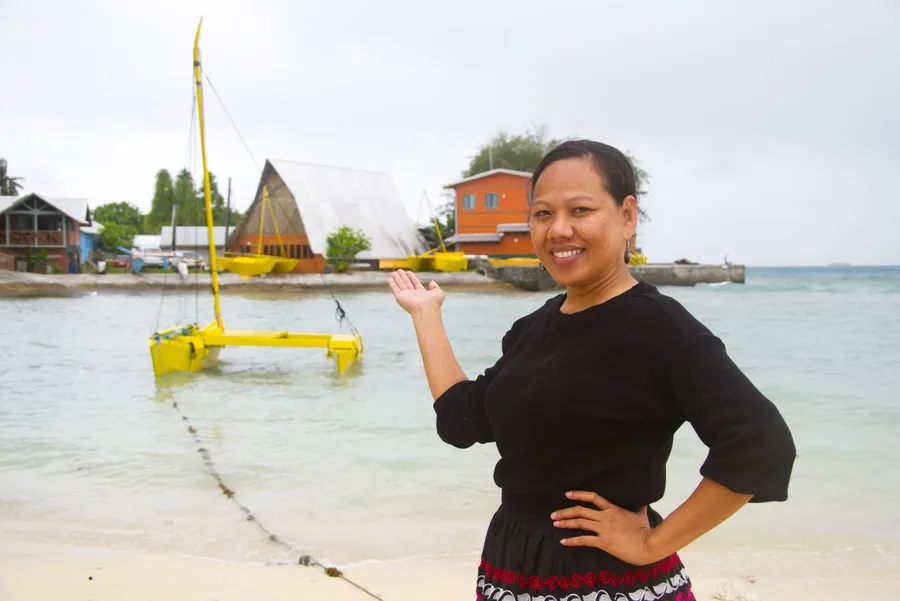
Nothing compares to the local insights gained on a guided tour, and Wutilomar Tours. Your friendly guide, Romi, shares all sorts of fascinating cultural facts on her down-to-earth private sightseeing tours.
Starting at 9 am, the day moves through the Alele Museum (traditional artefacts, stick charts and replica canoes), the MISCO Handicraft Market, and Waan Aelon in Majel, where traditional canoe construction is very much alive and ongoing.
Lunch is a bento plate from a local food truck, with your preference of local, western or oriental taken at booking. The afternoon takes in the Japanese Peace Park, Tobolar (Micronesia's only copra processing factory) and finishes at Laura Beach for a swim and a hands-on weaving lesson in the traditional Marshallese way.
Lunch, water and a local coconut drink are all included, with discounted rates for groups of three or more.
What makes a cultural tour with Wuilomar Tours extra special is that many of the sights around Majuro don't have interpretation panels, so without Romi's guidance, you'll miss out on a lot of sightseeing context.
Majuro. Pick-up/meeting points are arranged with the tour operator upon booking.
4.Join the Locals for Fishing (Nationwide)

Fishing in the Marshall Islands is more than a holiday activity. It is part of everyday life, supplying food, bringing communities together and producing the sort of fish stories that become slightly larger with every retelling.
One of the easiest ways to experience this side of Marshallese culture is to join local anglers beside The Bridge, a dock or the lagoon shoreline. Bring your own rod, tackle and lures for independent fishing, as equipment hire is limited.
Better yet, organise a trip with a local boat operator and ask to try handline fishing, a common local technique used to target reef fish without the usual tangle of rods, reels and expensive gadgets.
Some charter crews keep the catch and share it with their families or the surrounding community, while others may let you take a portion back to your accommodation. Ask about the arrangement before departure, particularly when you have already mentally promoted yourself to head chef.
For a guided fishing experience, Salty Services offers half-day and full-day charters from Majuro aboard Jinekjej, with trolling and bottom fishing options, all fishing gear provided and up to six passengers. Led by local skipper and conservation coordinator Beven, the trips combine fishing with insights into marine conservation, while any catch you don't take home is shared with the local community.
For charter operators, target species, fishing seasons and further practical advice, see The Ultimate Guide to Fishing in the Marshall Islands.
Location: Available nationwide. See the link above for recommendations and their locations.
Price Range: $$$$
5.Browse Unique Marshallese Handicrafts (Nationwide)

You won’t find many souvenirs more distinctly Marshallese than the islands’ intricate handicrafts, collectively known as Amimono. Regarded as some of the finest crafts in the Pacific, these woven works are as much a part of everyday island life as they are beautiful keepsakes.
The term Amimono actually comes from Japanese, meaning “knitting or weaving”, and was adopted during the early 1900s to describe handicrafts made by Marshallese artists. Even in a region where every island nation has its own weaving traditions, Marshallese work stands out for its exceptionally detailed patterns, right down to the delicate rose worn behind the ear.
Artisans use natural materials such as kimej, the membrane of a coconut shoot, law, or hibiscus fibre, prepared pandanus known as maan and stiffened coconut-frond strips called malwe. The preparation of kimej is a closely guarded local secret (so don’t expect anyone to reveal the recipe over the shop counter).
Look out for woven mats, baskets, work baskets, hats, model canoes, purses, fashion jewellery and oboñ, the decorative wall hangings seen in Marshallese homes. Skills are passed through generations, often beginning in childhood, while handicraft sales remain an important source of income for many families on the outer islands.
Location: Available nationwide from handicraft shops, community sellers and local artisans, with the widest selection found around Delap-Uliga-Djarrit, Majuro. For a complete list, check out The Guide to Shopping in the Marshall Islands + The Best Places to Shop.
Price Range: $
6.Make Your Own Handicrafts at Elefa (Majuro)

Elefa Handicraft is a handicraft store with a difference: offering its own handicraft workshops so you can learn to braid like the Marshallese and make a unique souvenir to take home.
Local ladies craft beautiful jewellery and keepsakes right before your eyes using shells, while coconut fibres and other materials sourced from Majuro and the outer islands.
Earrings and flowers are the most popular items, alongside necklaces, bracelets and magnets, with special pieces from Arno Atoll also available. What makes this place genuinely special is that no two pieces are quite the same.
On Saturdays, you can book a one-hour handicraft workshop where local ladies will teach you to make your own necklace, earrings or bracelet using the same materials they work with daily. Classes are tailored to what you'd like to make, and all materials are supplied.
Book your Saturday class through their Facebook or Instagram pages and drop in any other day (9 am to 5:50 pm, Monday to Friday or 1 pm to 5:30 pm, Saturday) to browse and shop.
Learn more about Marshallese souvenirs in the 10 Best Souvenirs from the Marshall Islands.
1317 Uliga Boulevard, Delap-Uliga-Djarrit, Majuro. The store is clearly signposted along the main road. The building also has a large mural of a girl braiding.
7.Experience Contemporary Copra Processing at Tobolar (Majuro)

If you've made it all the way to the Marshall Islands, we probably don't need to tell you how vital the coconut is and has been to the people who have occupied these islands for thousands of years. A new spin on your classic "coconut demonstration" is a full-fledged factory tour with the Tobolar Copra Processing Authority!
Most simply know it as "Tobolar", and it is the only copra processing plant in the whole of Micronesia.
Open since 1974, this government-owned facility processes around 7,000 metric tons of dried coconut kernel each year, sourced from over 3,000 copra farmers across the archipelago. On the tour, you'll follow the full production flowchart, from the massive triangular storage warehouses to the grinders, cookers and expellers used to process up to 50 tonnes of copra per day.
You'll see how crude coconut oil and copra cake are produced, packaged and exported to markets in Vietnam, Thailand, Australia and beyond, and even spot the karts used by local farmers to collect copra.
Tours are around 30 minutes and can be arranged directly with Tobolar (just call and book) or as part of a guided trip; Wutilomar Tours includes a stop at their refinery on the way to Laura.
Discover how coconuts are processed into local products on a guided visit to the Tobolar factory with Wutilomar Tours.
Delap Dock, Delap, Majuro. Located behind the Marshalls Energy Company.
8.Try Local Food and Drinks (Nationwide)

Eating like a local in the Marshall Islands often starts beside the road, where barbecue stalls and grab-and-go takeaway spots serve fish, turkey tails and generous bags of freshly cooked to̧nōt (donuts). A classic Marshallese breakfast can be as simple as a to̧nōt, boiled egg with coffee, proving that not every cultural experience needs a tasting menu or matching napkin.
For a broader introduction, head to Riwut Restaurant and order the “Local Combo”. This hearty plate usually brings together local fish, traditional side dishes and desserts enriched with coconut cream, making it an easy way to sample several flavours in one sitting.
Pandanus is another ingredient to look out for. Marshallese communities are among the few Pacific island cultures to have relied so heavily on the fruit for sustenance, and it still appears in both traditional foods and modern creations.
Today, you can try it blended into sweet, creamy bobshakes, essentially pandanus milkshakes, or transformed into locally made spirits by Marshall Islands Pandanus Co. Both offer a distinctly Marshallese take on an ingredient that has supported island life for generations.
For more dishes, dining spots and local drinks to seek out, see the 10 Best Foodie Experiences in the Marshall Islands.
Location: Nationwide! See the Traditional Marshallese Food: 10 Foods to Try in the Marshall Islands to see where to try specific Marshallese food and drinks.
9.Experience the Spirituality of the Marshallese at a Church Service (Nationwide)

Church plays an important role in community life across the Marshall Islands, and attending a service offers one of the most moving ways to experience local culture. Expect heartfelt worship, congregations dressed in their Sunday best and choral singing so powerful that the language barrier quickly becomes irrelevant.
Most services are held on Sunday mornings, although some churches also gather on Saturday evenings. Larger congregations may follow a formal programme of hymns, scripture readings, prayers, a sermon and performances from youth choirs, while smaller outer-island churches offer a more intimate community experience.
In Majuro, accessible options include the Cathedral of the Assumption, Uliga United Church of Christ and the smaller churches lining the lagoon road towards Laura. Services are often conducted in Marshallese, although some churches offer an English-language Mass or service at a separate time.
Dress respectfully, with long pants for men and a skirt or dress covering the knees for women. Arrive a few minutes early, keep your phone tucked away during worship and ask before taking photographs.
For suggested churches, service details and visitor etiquette, see the 5 Best Churches in the Marshall Islands to Experience as a Visitor.
Location: Nationwide. See the link above for recommendations and their locations.
Price Range: Free
10.Attend a Marshallese Event (Nationwide)

Time your trip with a local event and you will see the Marshall Islands at its most energetic. National holidays, church celebrations, fishing tournaments and community festivals bring together music, dancing, food and enough friendly competition to keep everyone talking long after the trophies have been handed out.
One of the biggest occasions is Constitution Day on 1 May, when communities celebrate the adoption of the country’s Constitution with sports, parades, cultural performances and local food. The competitions often build over several months, so the main day feels more like a grand finale than a single afternoon out.
Christmas is another especially memorable time to visit. Church groups known as jepta rehearse songs and dances, including routines called biit, before travelling between churches to perform, while some celebrations end with the breaking of a gift-filled wojke.
Majuro hosts many of the country’s largest public events, but smaller church gatherings, sports days and community celebrations take place throughout the outer atolls. Ask your accommodation host what is happening during your stay, as local events are not always advertised far in advance (island calendars occasionally prefer a little suspense).
For annual highlights, dates and event details, see the 5 Biggest Events & Festivals in the Marshall Islands.
Location: Nationwide!
Price Range: $
More Cultural Activities in Majuro and the Marshall Islands
That's it for our list of the best cultural activities in Majuro and the Marshall Islands, but it's by no means the end of our advice! Check more guides to experiencing the Marshall Islands culture across the islands:
- Traditional Marshall Islands Food: 10 Foods to Try in the Marshall Islands
- The Best Museums in the Marshall Islands
- 15 Best Historical Sites in the Marshall Islands
Finally, complete your bucket list with the 101 Best Things to Do in the Marshall Islands: The Ultimate List and if there's anything we've missed, you're likely to find it in A Traveller's Guide to the Marshall Islands Culture.