

%20CREDIT%20MarshallIslandsPocketGuide.com.webp?v=2026-07-09T19%3A15%3A20.297Z)
The Best Dive Sites in the Marshall Islands
Scattered across the central Pacific, the Marshall Islands offers some of the most varied and historically fascinating scuba diving in the region. The best dive sites combine thriving coral formations, dramatic underwater terrain and an extraordinary collection of wrecks.
Around Majuro, divers can explore sheltered lagoon sites, towering coral bommies and ocean-facing reefs where sharks, rays and large schools of fish gather when the tides are right. There are also aircraft, helicopter and shipwrecks at different depths, giving both newer and experienced divers plenty to sink their fins into.
Farther afield, Bikini Atoll is famous for its immense wartime wrecks, where aircraft carriers and other vessels now form artificial reefs in deep, clear water. These are serious technical dives rather than casual holiday dips, but for qualified wreck divers, they are among the most remarkable underwater experiences anywhere in the world.
Most visitors will dive with local professionals who understand the tides, currents and less obvious entry points (you’ll find more details in The Best Dive Shops & Operators in the Marshall Islands). Whether you are drawn to coral-covered wrecks, shark-filled reefs or sheer underwater scale, these dive sites are likely to stay with you long after your gear has dried.
This article is based on real on-the-ground research, not on AI scraping old content from the internet. Learn how we use AI!
Table of Contents
1.Enemanit Wrecks (Majuro)
%20CREDIT%20MarshallIslandsPocketGuide.com.webp?v=2026-07-09T19%3A15%3A03.828Z)
There are plenty of amazing wreck dives in the Marshall Islands, and one of the most accessible is the ensemble of wrecks off Enemanit Island, understandably known as "Enemanit Wrecks".
The star of the show is the Sea Star Pacific DC-3, sitting at a maximum depth of around 10–13 ft (3–4 m) at its shallowest, making it a natural choice for your safety stop on the way up.
Drop deeper and you'll find the UH-1H Huey helicopter wreck, its coral-encrusted body remarkably intact, especially around the window area and where the pilot once sat. Coral bommies dot the sandy bottom throughout the site, adding texture to an already extraordinary underwater landscape.
Rounding it all out is the sunken cruise ship, the Oleanda, which descends to a maximum depth of 82 ft (25 m). It's a popular option with Raycrew Marine Services, whose dive trips depart from the Marshall Islands Resort.
For more about Raycrew, check out The Best Dive Shops & Operators in the Marshall Islands.
Enemanit Island, northern Majuro. The shallowest wreck, the plane wreck, is located approximately 100 ft (30 m) from shore, directly in front of the marquee or about 100 ft (30 m) west of the end of the pier. The other wrecks are all nearby, best explored with an experienced guide, like Raycrew Dive.
2.No. 9 (Majuro)
-U%20CREDIT%20MarshallIslandsPocketGuide.com-900x507.webp?v=2026-07-09T19%3A16%3A39.679Z)
Coral! Coral everywhere! No. 9 is a pretty cool dive site, almost right in the centre of the Majuro Lagoon.
No. 9 ranges from just 6.6 ft (2 m) at its shallowest down to 130 ft (40 m) at its deepest, with most recreational dives settling comfortably between 39 ft (12 m) and 49 ft (15 m).
The reef here is dominated by Turbinaria reniformis, commonly known as yellow scroll coral, which fans out in giant leafy plates stacked dramatically across the reef structure.
Wildlife encounters are a real highlight; during our last visit, we spotted an eagle ray gliding effortlessly past, and later a shark made a cameo appearance (naturally, the moment the camera was put away, because sharks clearly understand comedy timing).
No. 9 is the favourite site of Raycrew, making it another easy addition to your diving itinerary.
Middle of the Majuro Lagoon, Majuro. Accessible via Raycrew Dive, based at the Marshall Islands Resort.
3.Aquarium (Majuro)
-U%20CREDIT%20MarshallIslandsPocketGuide.com-900x507.webp?v=2026-07-09T19%3A16%3A27.644Z)
One of the most thrilling dives in Majuro, the Aquarium dive site lives up to its name in the most dramatic way possible
Sharks, jackfish and Napoleon wrasse can all be found in around 65–72 ft (20–22 m) of water.
The catch? It's tide-dependent, meaning it's not always on the cards. When conditions align, Raycrew will take you out for what their team considers their absolute favourite site, and it's easy to see why.
Sitting on the ocean side of the atoll, this site is exposed to strong currents, so expect either a drift dive or a hold-steady style dive depending on the day. Either way, the marine life makes it well worth the wait.
If you're already planning a dive day, slotting the Aquarium in alongside other sites is an easy decision. Just make sure the tide is on your side.
Ocean side of the atoll, Majuro. Accessible via Raycrew Dive, based at the Marshall Islands Resort.
4.Mountain (Majuro)
-U%20CREDIT%20MarshallIslandsPocketGuide.com-900x507.webp?v=2026-07-09T19%3A16%3A33.183Z)
A towering coral formation so large and so dramatic, Mountain has caused divers to simply name it after what it looks like: a mountain of coral.
Rising from just 3.3 ft (1 m) below the surface down to depths of 98–102 ft (30–31 m), this, indeed, is another striking dive site in Majuro.
Accessed via Raycrew, this site is essentially a massive bommie (or coral bommie, for the uninitiated) blanketed in corals of different colours, making it as visually rewarding for snorkellers near the surface as it is for experienced divers exploring its deeper reaches.
Whether you hover near the top or descend into the blue alongside the coral walls, the sheer scale of the formation is something you genuinely have to see to believe. It's not flashy; it's just extraordinary in the way that great natural things tend to be.
Majuro Atoll. Accessible via Raycrew Dive, based at the Marshall Islands Resort.
5.Heaven's Hill (Majuro)
-U%20CREDIT%20MarshallIslandsPocketGuide.com-900x507.webp?v=2026-07-09T19%3A16%3A30.413Z)
Heaven's Hill is a popular dive site off Majuro that draws divers back time and again, thanks to its varied underwater landscape and reliable fish life.
The site features a sandy seafloor scattered with large and small patch coral formations, creating a patchwork of colour and texture that gives divers plenty to explore at a relaxed pace.
Schools of damsel fish are a regular highlight here, darting around the coral heads in impressive numbers. It's the kind of dive that rewards slow, unhurried exploration rather than ticking off big pelagics.
Heaven's Hill is another favourite with the team at Raycrew, which says plenty about its appeal to experienced local divers who know these waters well.
Majuro Atoll. Accessible via Raycrew Dive, based at the Marshall Islands Resort.
6.USS Saratoga (Bikini Atoll)
%20CREDIT%20Bikini%20Atoll%20File%20Photos-900x593.webp?v=2026-07-23T19%3A08%3A11.277Z)
The USS Saratoga (CV-3) is the signature dive of Bikini Atoll and one of the largest diveable wrecks in the world, an 888-foot aircraft carrier resting upright on the lagoon floor at 167 ft (51 m).
Her crew called her the Sister Sara or Sara Maru, and once you're hovering above her flight deck at 89 ft (27 m), you'll understand why she commands such reverence.
The wreck is vast enough to require multiple dives just to get your bearings, with highlights including the partially intact flight deck, anti-aircraft guns (twin 5-inch mounts, 40 mm Bofors and 20 mm Oerlikon guns), scattered wartime ordnance and planes resting on the seabed in surprisingly pristine condition.
Penetrating her interior is where things get truly extraordinary; seven decks of passageways, galleys, storerooms and mess decks remain largely unexplored, with permanent lines installed in key sections to guide you through.
A technical qualification to 164 ft (50 m) and a closed-circuit rebreather (CCR) are strongly recommended to make the most of every dive. Accessible via liveaboard vessels such as Pacific Master and occasionally Indies Trader.
Bikini Lagoon, Bikini Atoll, northern Marshall Islands. The wreck lies upright on the lagoon floor; accessible only by liveaboard.
7.IJN Nagato (Bikini Atoll)
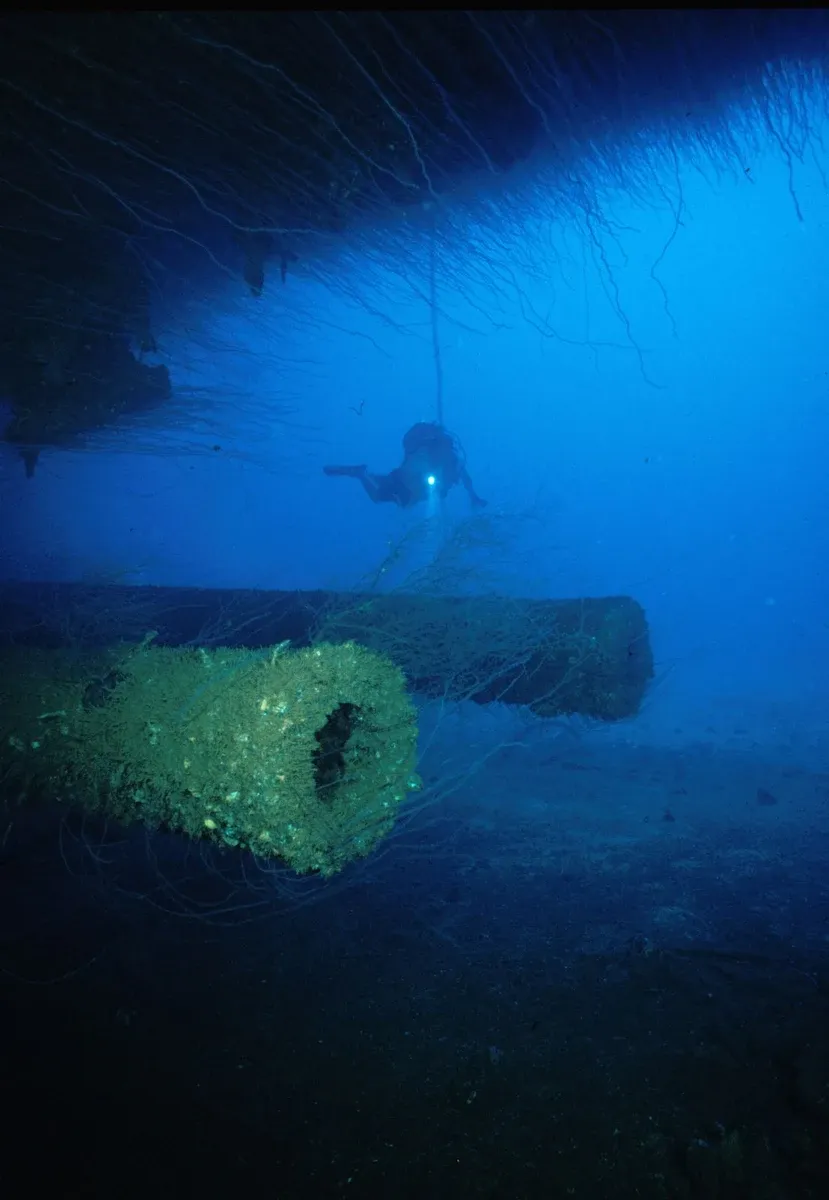
Resting completely upside down, IJN Nagato is one of Bikini Atoll’s largest and most historically significant wrecks.
The 708 ft (216 m) Japanese battleship lies with its shallowest point at approximately 110 ft (34 m), while the seabed reaches 171 ft (52 m).
Divers usually begin around the enormous rudders and four propellers before descending towards the main deck, pagoda-style bridge and main gun turrets.
Two large guns remain visible beneath the overturned hull, while the ship’s size means several dives may be needed to appreciate the wreck properly.
Nagato survived both Operation Crossroads explosions before gradually capsizing and sinking several days after the underwater Baker test in 1946.
The depth, overturned structure and potential overhead areas make this a challenging technical dive, ideally suited to experienced closed-circuit rebreather divers. Grey reef sharks, turtles and schooling fish are also regularly reported around the wreck.
Bikini Lagoon, Bikini Atoll, northern Marshall Islands.
8.USS Lamson (Bikini Atoll)
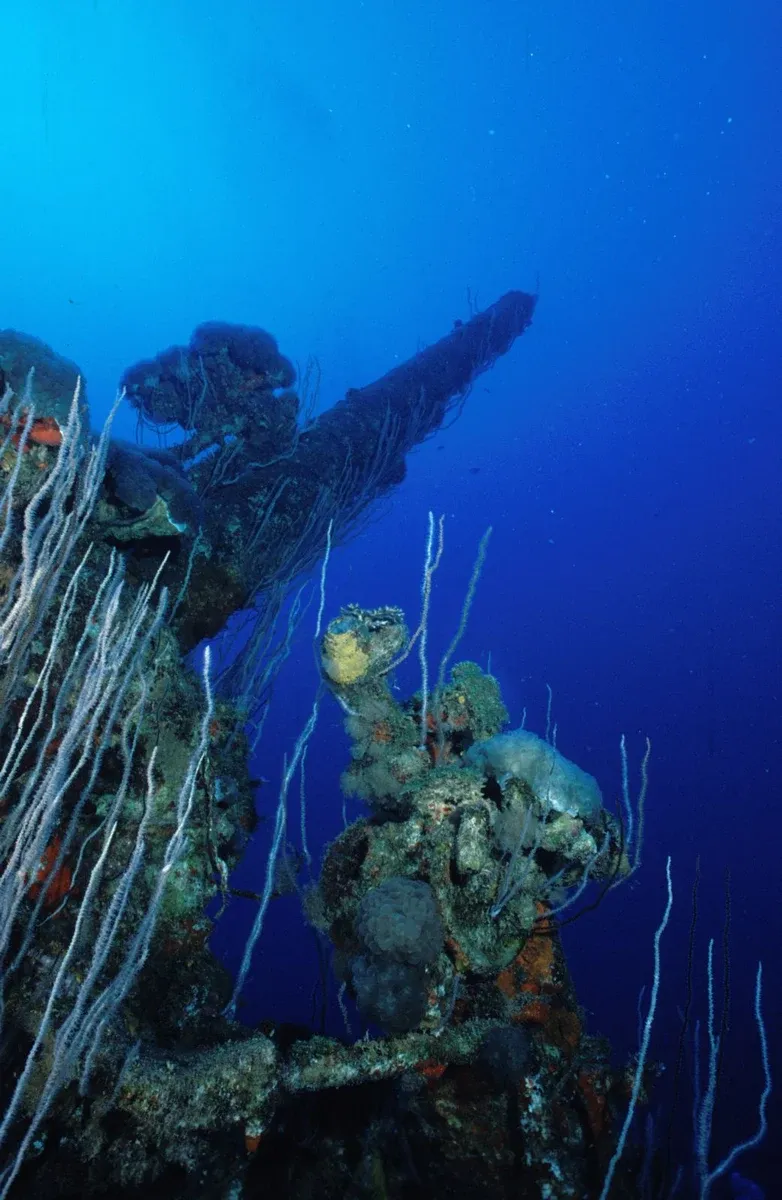
The 341 ft (104 m) USS Lamson offers a more compact wreck than the aircraft carriers and battleships scattered across Bikini Lagoon.
The destroyer sits upright, with the main deck at approximately 157-161 ft (48-49 m) and the seabed around 167 ft (51 m).
The Able nuclear test tore away much of the bridge, masts and upper structure, leaving the hull visibly twisted by the force of the explosion. However, divers can still inspect large deck guns, anti-aircraft weapons, depth-charge racks and torpedo tubes, some with torpedoes remaining inside.
Its manageable size makes it possible to cover a substantial part of the exterior during one carefully planned technical dive.
Whip corals, soft corals and table corals now grow across the wreck, while glassfish, groupers and wrasses gather around the remaining structures. Do not approach or handle any ammunition or unidentified objects.
Bikini Lagoon, Bikini Atoll, northern Marshall Islands.
9.Prinz Eugen (Kwajalein Atoll)
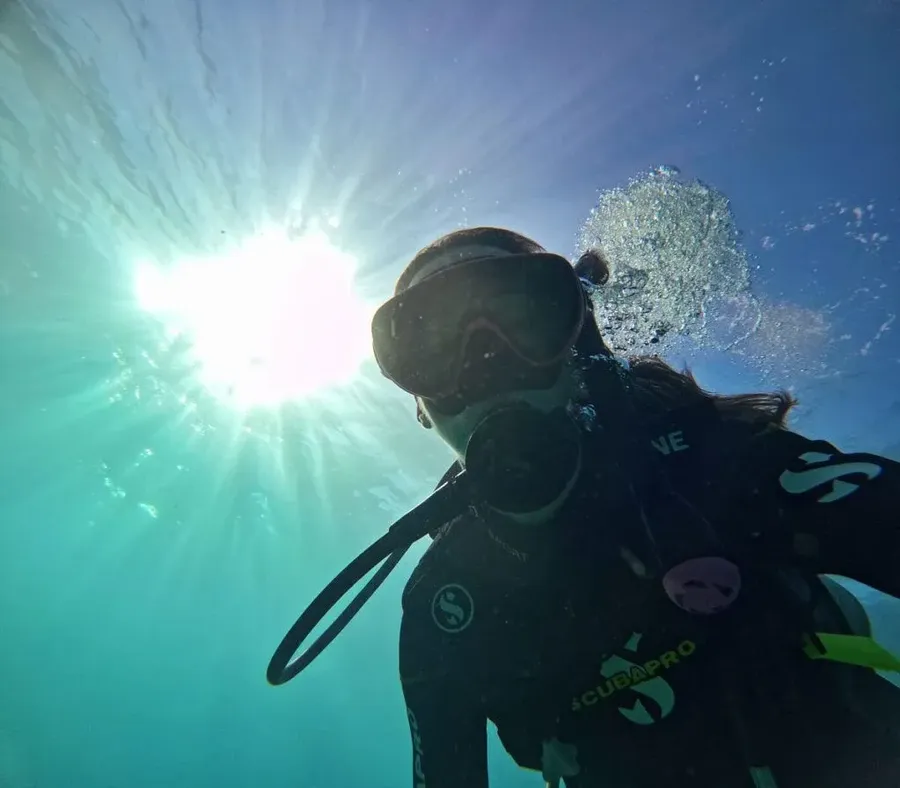
Lying upside down beside Enubuj, Prinz Eugen is one of the Marshall Islands’ most accessible large wartime wrecks in terms of depth.
Part of the hull and a propeller remain close to the surface, while the bow reaches approximately 118 ft (36 m).
The 697 ft (212 m) German heavy cruiser survived both Operation Crossroads tests at Bikini Atoll before being towed to Kwajalein, where it capsized in December 1946. Divers can see the enormous hull, rudders, propellers, gun positions, torpedoes and seaplane crane, with nurse sharks sometimes resting beneath the bow.
Access is the main complication. Kwajalein Island is not generally open to tourists, and the wreck can occasionally be placed off-limits by US authorities.
Some specialist Bikini Atoll liveaboards include it as an initial check dive when permission, schedules and conditions allow, so never assume it will be available.
Off Enubuj, Kwajalein Atoll.
10.USS Arkansas (Bikini Atoll)
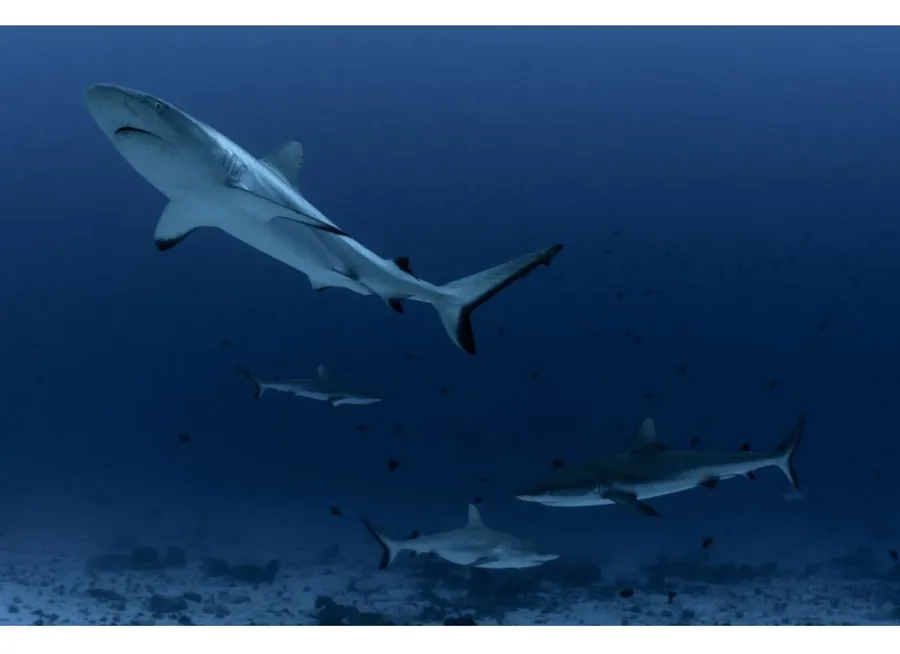
Lying almost completely upside down, USS Arkansas is one of Bikini Atoll’s most unusual technical wreck dives.
The battleship rests at approximately 170 ft (52 m), although parts of the hull rise to around 85 ft (26 m).
Divers can explore the vast inverted hull, propellers and exposed 12-inch gun barrels. The force of the underwater explosion left sections of the heavily armoured hull deeply rippled and dented, providing a striking reminder of the power of the test.
Arkansas served in both World Wars, including supporting the Normandy landings, before being selected as a target for Operation Crossroads. It survived the Able airburst but sank during the underwater Baker test on 25 July 1946.
Its depth, decompression requirements and complex structure make this suitable only for properly qualified and experienced technical divers travelling with a specialist operator.
Bikini Lagoon, Bikini Atoll
More About Scuba Diving in the Marshall Islands
Sounds like a sweet scuba diving trip to the Marshall Islands, right? Now, plan the rest of your scuba journey using the following guides:
- The Best Dive Shops and Operators in the Marshall Islands
- The Best Snorkelling in Majuro: Top 5 Places to Snorkel
- 5 Best Boat and Sailing Tours in the Marshall Islands
Finally, for a variety of experiences in the Marshall Islands, don't miss the 101 Best Things to Do in the Marshall Islands: The Ultimate List.

-S%20CREDIT%20MarshallIslandsPocketGuide.com-900x345.webp?v=2026-07-23T03%3A40%3A08.241Z)
-SEB%20CREDIT%20MarshallIslandsPocketGuide.com-900x506.webp?v=2026-07-19T00%3A06%3A29.505Z)