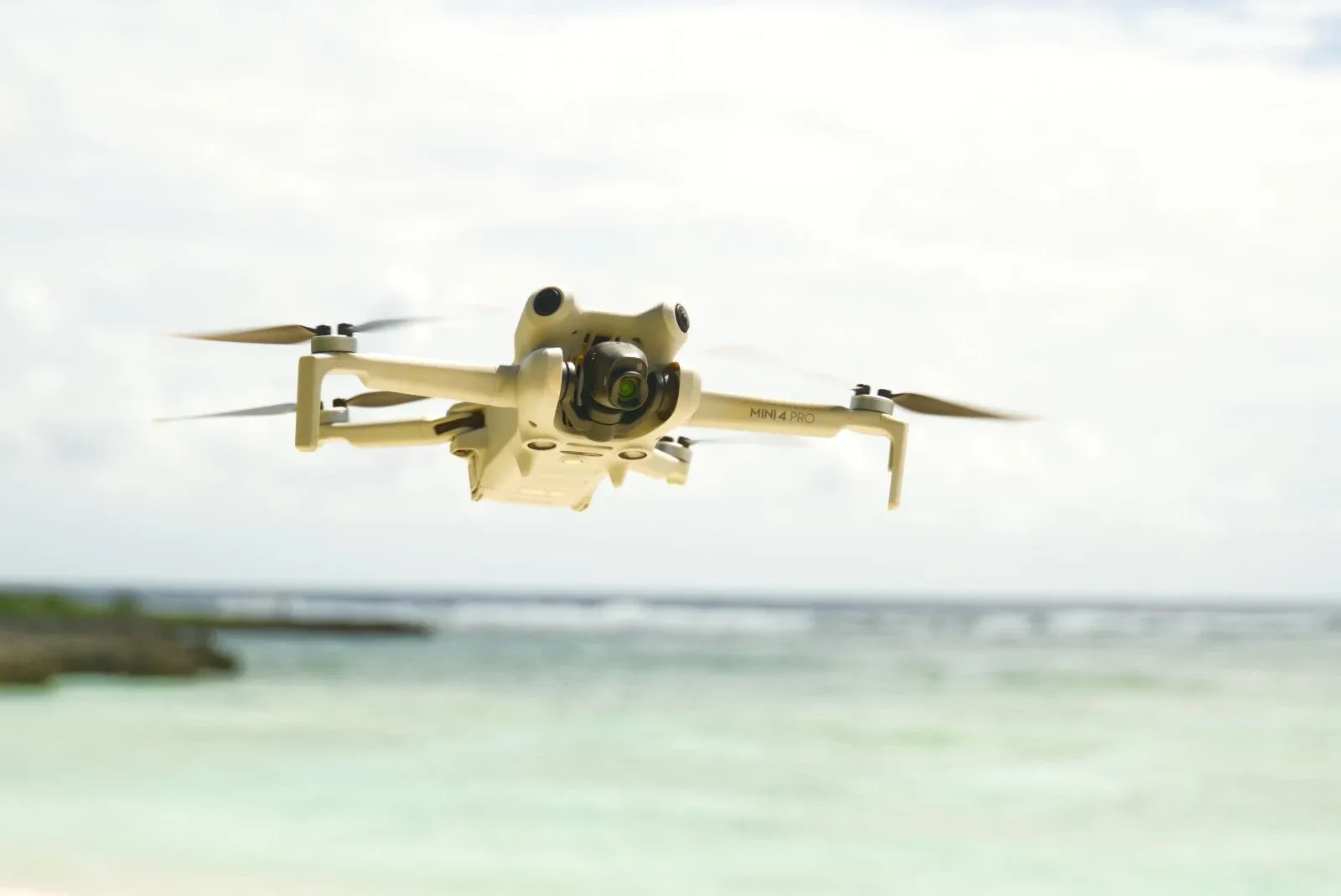
A Complete Guide to Drones in Majuro and the Marshall Islands
From palm-fringed atolls to brilliant blue lagoons, the Marshall Islands looks spectacular from above. Bringing and flying a drone is generally straightforward, but there are still a few rules, notifications and security restrictions you need to understand before take-off.
In this guide, we explain whether you need a permit, how to complete the Directorate of Civil Aviation notification form, what to know about airport operations, and why flying near Kwajalein and Roi-Namur is strictly off-limits.
There may be little or no geo-locking to stop your drone from launching, but that does not mean every flight is safe or authorised, as we discuss in this guide to flying a drone in the Marshall Islands.
This article is based on real on-the-ground research, not on AI scraping old content from the internet. Learn how we use AI!
Table of Contents
Can You Bring Your Drone to the Marshall Islands?
There are no restrictions stopping you from bringing a drone into the Marshall Islands. However, if your drone, camera or other equipment is particularly valuable, declare it on your Customs Declaration Form when you arrive.
High-value equipment brought in temporarily may be subject to a security bond equal to 8% of its value. This is refunded when you take the equipment out of the country, so keep the customs paperwork and receipt somewhere safer than the bottom of your beach bag.
We recommend carrying your drone in your hand luggage where possible. At the very least, pack the lithium-ion batteries in your carry-on luggage and check your airline’s battery limits before travelling.
For more information about declarations and arriving with valuable equipment, see Arriving in the Marshall Islands: Airport Customs, Biosecurity & Arrival Process.
Do You Need a Permit to Fly Your Drone in Majuro and the Marshall Islands?
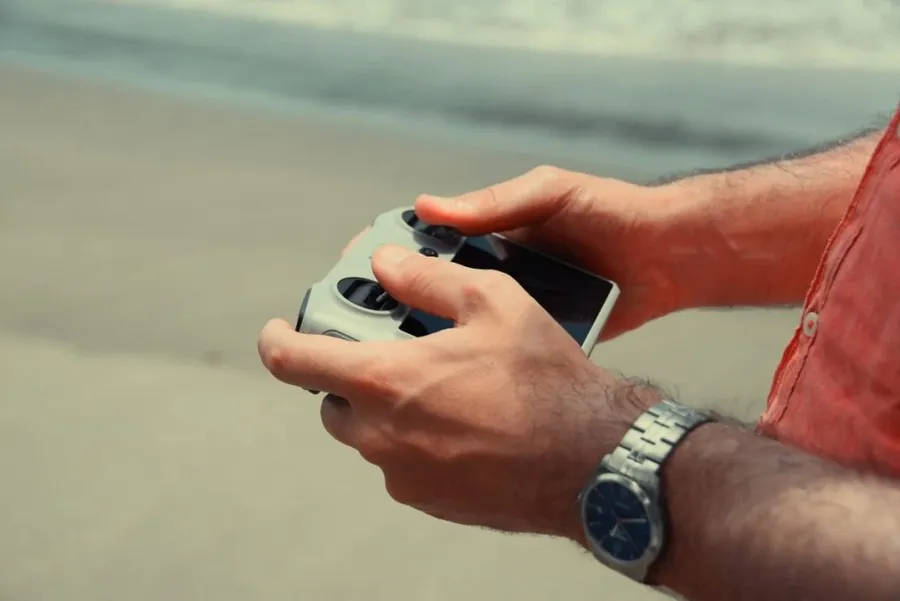
Not really. You do not usually need a conventional drone permit for recreational flying in the Marshall Islands, but the Directorate of Civil Aviation (DCA) asks drone operators to notify them of their intended flight.
The easiest way to do this is to complete and submit the Marshall Islands drone notification form before you fly. Think of it as a quick heads-up rather than a mountain of permit paperwork.
Extra approval is required for commercial operations, flights near sensitive facilities, or any activity on Kwajalein and Roi-Namur, where strict military security rules apply.
The Marshall Islands DCA can be contacted at rmidca@ntamar.net or rmidca@yahoo.com
Marshall Islands Drone Rules
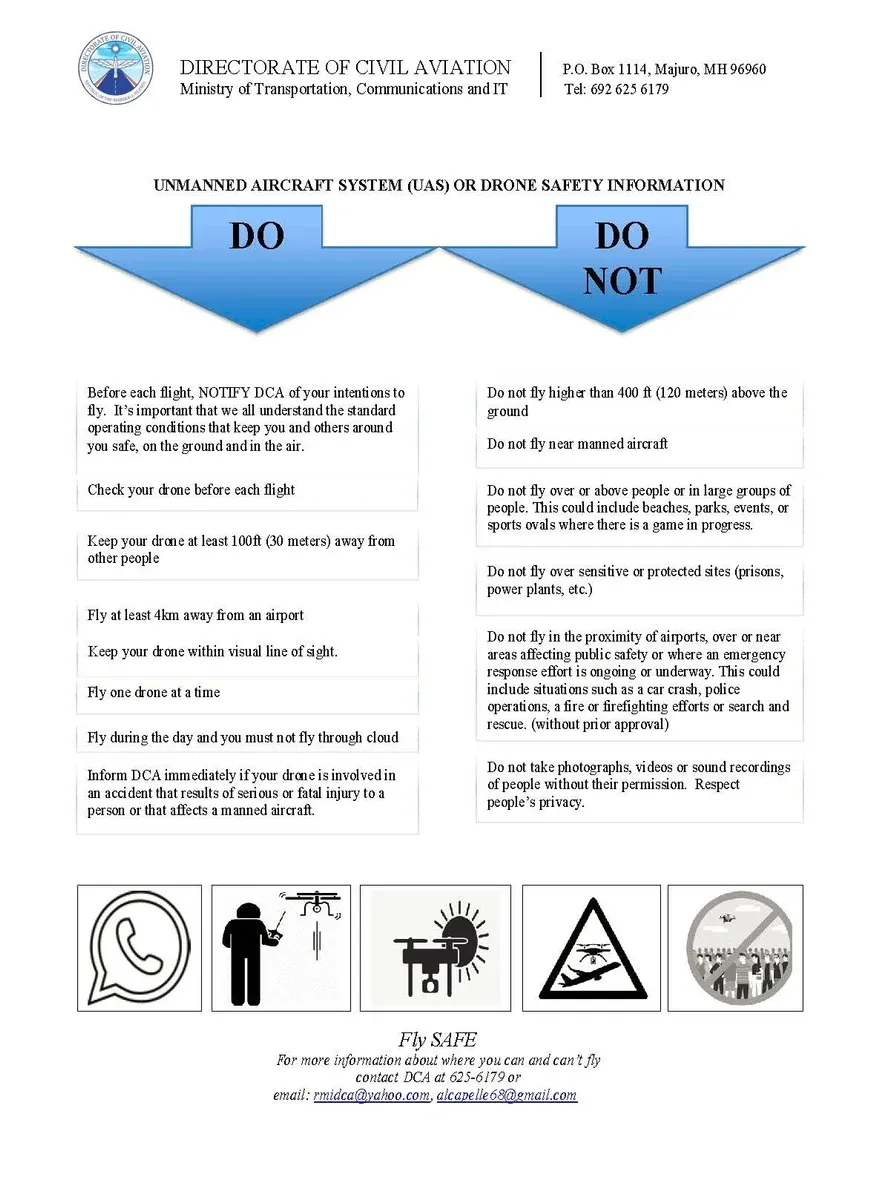
The Directorate of Civil Aviation (DCA) asks drone pilots to follow several straightforward safety rules.
Marshall Islands Drone Flight Authorisation Form
Before each flight, submit the Marshall Islands drone notification form so the authorities know where and when you intend to fly.
The notification form asks for the operator’s certificate, so have a copy ready before submitting it. Many drone training courses, for example, New Zealand’s Part 101 rules, teach pilots to contact the airport control tower before flying within an airfield’s controlled area.
It is sensible to keep up this habit in the Marshall Islands, particularly because some airports are not protected by DJI geo-locking. A drone being able to take off does not mean the flight is automatically safe or authorised, so contact local air traffic control whenever you plan to fly near an airport.
Flight Safety Rules in the Marshall Islands
The Directorate of Civil Aviation (DCA) asks drone pilots to follow several straightforward safety rules.
The main drone rules are:
- Check your drone before every flight
- Keep at least 100 ft (30 m) away from other people
- Fly at least 2.5 mi (4 km) from an airport
- Keep your drone within your visual line of sight
- Fly only one drone at a time
- Fly during daylight hours and never through clouds
- Do not fly higher than 400 ft (120 m) above the ground
- Keep well clear of manned aircraft
- Do not fly over people, beaches, parks, events or large gatherings
- Do not fly over prisons, power plants or other sensitive sites
- Stay away from airports, emergency scenes, police operations, fires and search-and-rescue activity unless you have prior approval
- Do not photograph, film or record people without their permission
There may not be a built-in DJI no-fly zone around every Marshall Islands airport, meaning your drone might take off without an unlock request. However, the absence of a software restriction does not override the DCA’s rule to remain at least 2.5 mi (4 km) from an airport (your drone saying “yes” does not necessarily mean the authorities agree).
You should also report any accident involving serious or fatal injury, or any incident affecting a manned aircraft, to the DCA immediately. See the official DCA drone safety notice for the rules supplied by the Marshall Islands aviation authority.
Military and Security Restrictions
Kwajalein and Roi-Namur are heavily restricted military areas. Never fly over or near operational launch facilities, housing areas, airfields or secure infrastructure without explicit authorisation, as unauthorised flights can create serious safety and national security risks.
More About Drones in the Marshall Islands
That's it for our complete guide to flying drones in Majuro and the Marshall Islands. For more about drones and specifically ground photography, however, take a look at the following guides:
- Airports in the Marshall Islands: Where Can You Fly to in the Marshall Islands?
- What to Pack for the Marshall Islands: Marshall Islands Packing List
- Sightseeing in the Marshall Islands: Top 10 Sights in the Marshall Islands
Finally, for more tips on bossing it in the Marshall Islands, see the 30 Tips for Travelling in the Marshall Islands.
-SEB%20CREDIT%20MarshallIslandsPocketGuide.com-900x633.webp?v=2026-07-23T03%3A25%3A07.979Z)